


Horizontal directional drilling rigs can be divided into many types according to different classification methods. The following are several common classification methods and types:
Ⅰ. Classification by push-pull force (tonnage)
Horizontal directional drilling rigs can be divided into four levels: small, medium, large and super large according to the size of their rated Pullback Force. Drilling rigs of different tonnage are suitable for different construction environments and crossing tasks. The following is a detailed classification description:
1. Small HDD rig (≤ 450 kN / 45 tons)
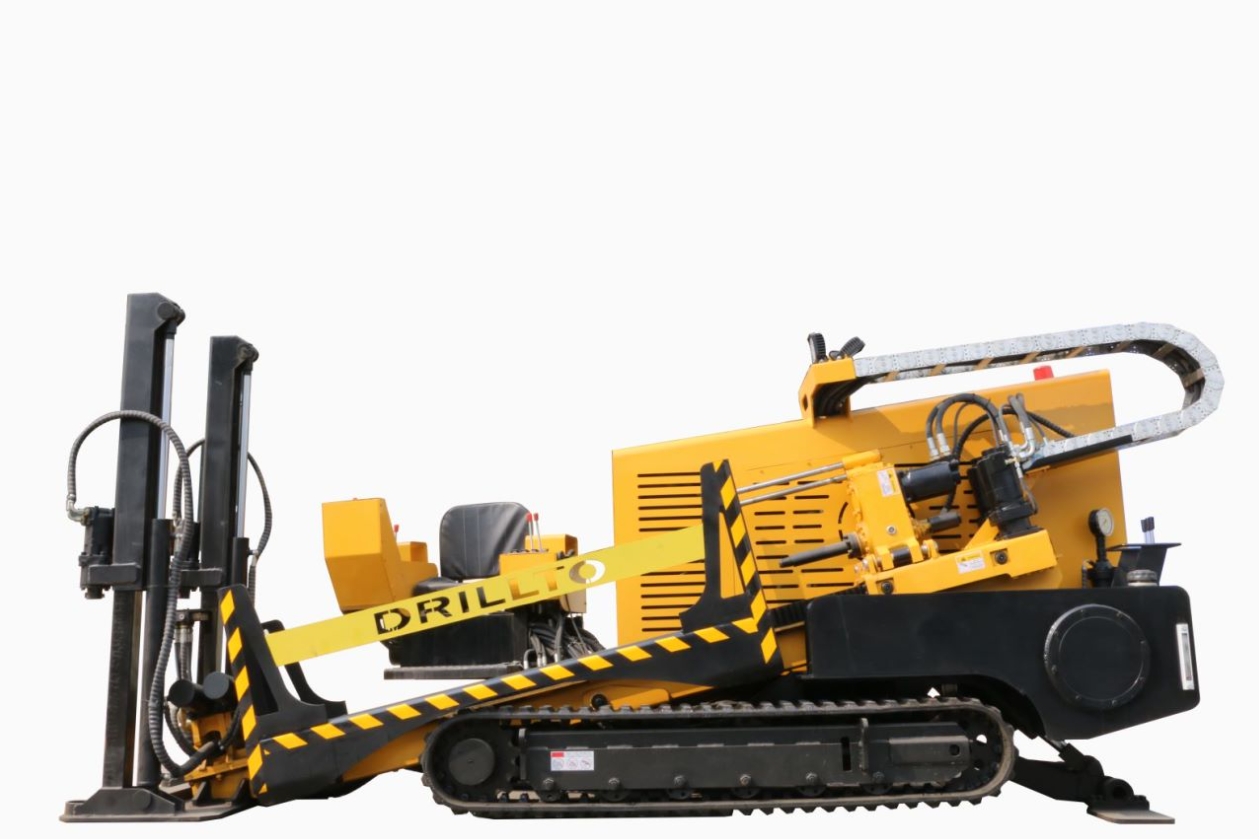
– Features:
Compact structure, easy to transport;
Easy to operate, suitable for small urban construction;
Mostly integrated, some are vehicle-mounted or crawler-type;
The push-pull force is relatively small, suitable for short-distance, small-diameter pipeline crossing.
– Applicable scenarios:
Urban power and communication optical cable laying;
Residential water or gas pipeline laying;
Crossing under road green belts or sidewalks.
– Advantages:
Low cost and small footprint;
Low energy consumption and low noise;
Non-professionals can also get started quickly.
– Limitations:
Cannot adapt to hard rock or long-distance crossing;
Limited load-bearing capacity, limited hole expansion diameter.
2. Medium HDD rig (450–1500 kN / 45–150 tons)
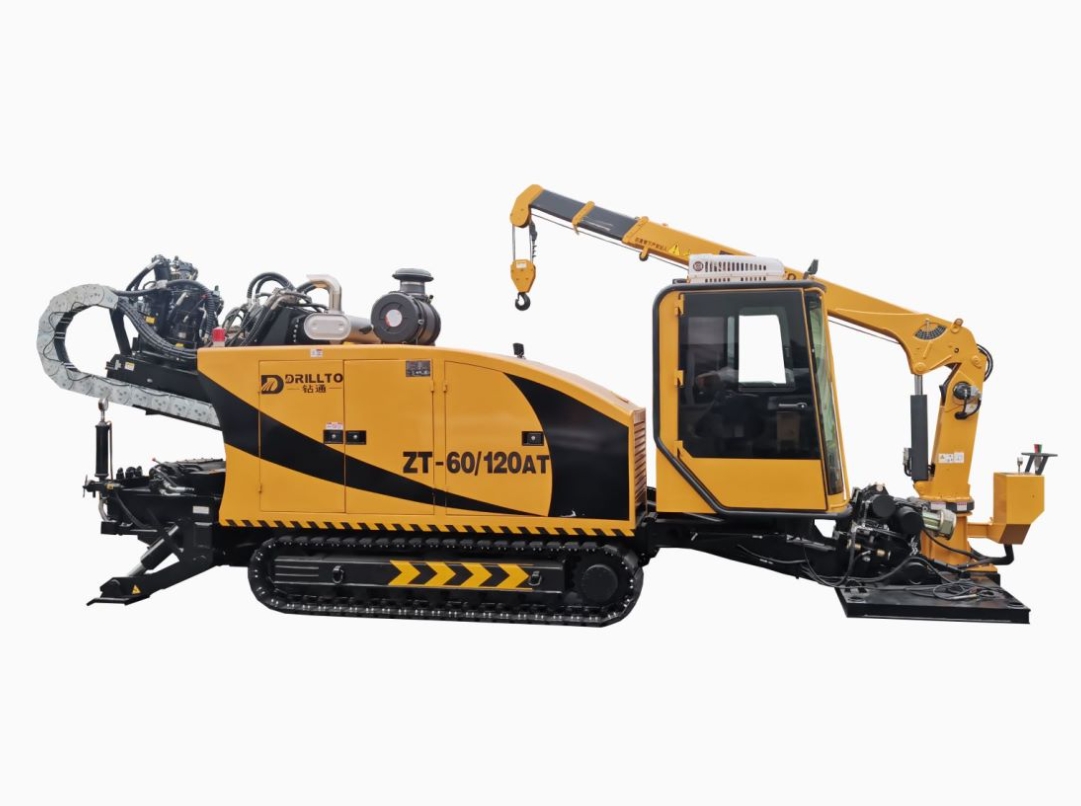
– Features:
Moderate power, covering a wide range of construction needs;
Suitable for construction projects of medium length and common pipe diameter;
Commonly used in municipal engineering and infrastructure renovation.
– Applicable scenarios:
Medium-pressure gas pipelines, rainwater and sewage drainage systems;
Medium-distance crossing construction;
Underpass of roads, rivers, and railways.
– Advantages:
Strong flexibility and wide application;
Good balance between cost and construction capacity;
Supports a variety of hole expansion tools and guidance technologies.
– Limitations:
Efficiency decreases in pebble layers and hard rock formations;
There is still a certain upper limit on the crossing length and diameter.
3. Large HDD Rig (1500 – 5000 kN / 150 – 500 tons)
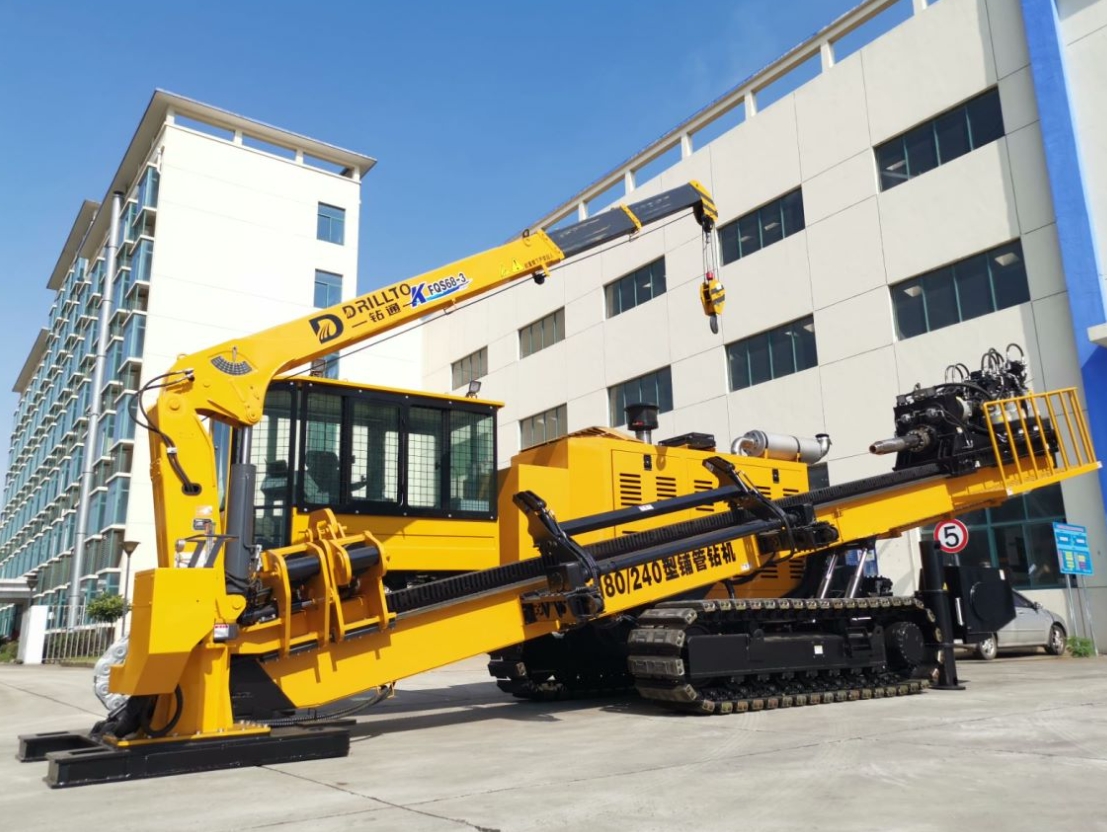
– Features:
Powerful, able to cope with complex geology;
Can be equipped with automated guidance, high-pressure mud system;
Often crawler or split type, suitable for long-term construction.
– Applicable scenarios:
Natural gas, oil long-distance pipeline projects;
Large underpass projects such as highways, wide rivers, airport runways;
Construction in special strata (pebble layers, gravel layers).
– Advantages:
High push and pull force, can achieve long-distance, deep buried crossing;
Support larger hole expansion, double-wall drill pipe and air hammer system;
Improve efficiency and safety.
– Limitations:
High cost, complex construction organization;
High requirements for operating technology and equipment maintenance;
Large area, adaptation site needs to be planned in advance.
4. Ultra-large HDD rig (> 6000 kN / 600 tons or more)
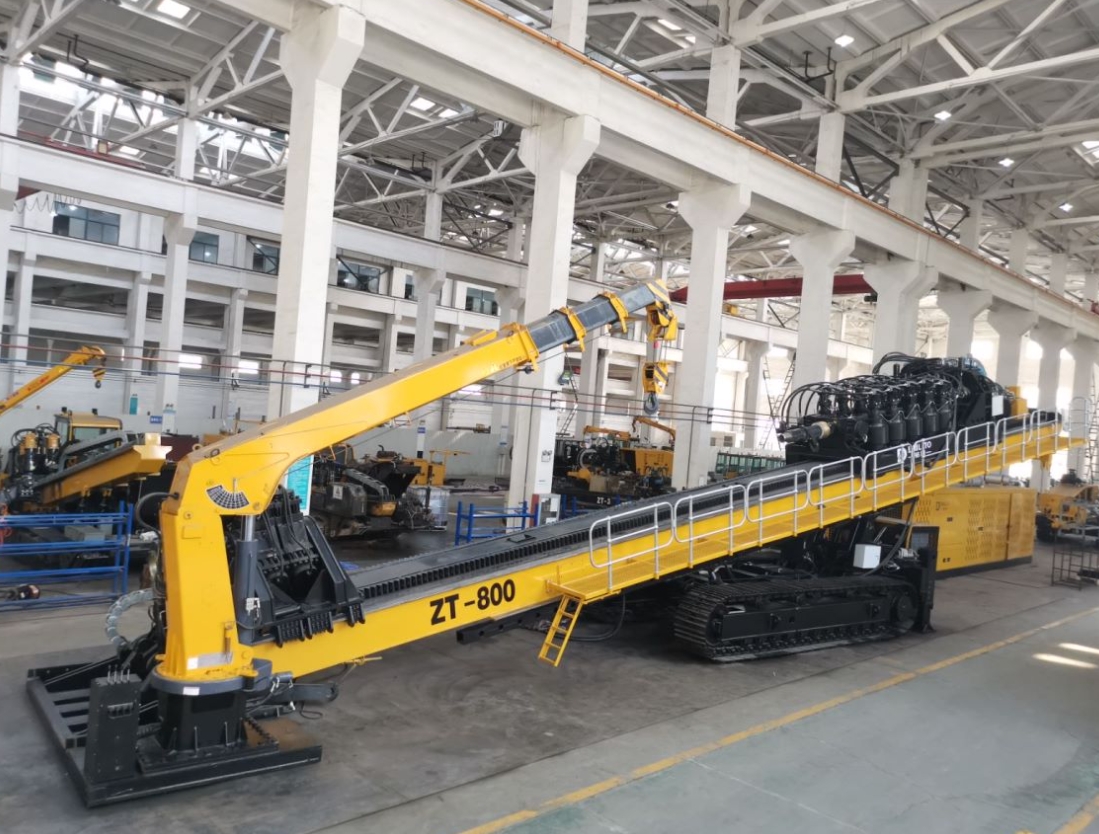
– Features:
Designed for ultra-long distance and ultra-large diameter crossing;
Can be equipped with multiple mud pumping stations, high-precision guidance and control systems;
Mostly used in national infrastructure projects.
– Applicable scenarios:
Large cross-river pipeline projects (such as crossing the Yangtze River and Amazon River);
Oil and gas pipeline projects;
Construction of submarine pipeline landing sections.
– Advantages:
Strong ability, adaptable to various complex geology;
Good stability in long-distance construction;
Used in conjunction with directional expansion and large mud recovery stations.
– Limitations:
Extremely high investment, not suitable for general enterprises;
Extremely high requirements for project management and process design;
Large site requirements and long construction period.
Ⅱ. Classification by drive mode
Horizontal directional drilling rigs (HDD) can be divided into three categories: hydraulic drive, mechanical drive, and electric drive according to the power source and transmission mode of the main drive system. Different drive modes have their own advantages in performance, control mode, energy consumption, maintenance, etc., and the selection needs to be combined with the construction environment, geological conditions and project requirements.
1. Hydraulic Driven HDD
– Principle description:
The hydraulic drive system converts the energy output by the engine into hydraulic energy through a hydraulic pump, and then drives the push-pull device, rotating device, etc. through a hydraulic motor to complete the drilling operation.
– Main features:
Smooth power transmission and adaptability to complex loads;
High control accuracy, suitable for various guidance and expansion operations;
Usually equipped with diesel engines, suitable for long-term continuous operation;
The mainstream models in the market generally use hydraulic drive.
– Applicable scenarios:
Small and medium-sized municipal crossings;
Long-distance pipeline construction;
Construction in variable formations, such as soft soil, sand layer, hard interlayer, etc.
– Advantages:
Powerful power and high torque;
Strong adaptability and high reliability;
Easy maintenance and strong versatility of accessories.
– Limitations:
The system is complex and has high requirements for oil products;
High energy consumption and not environmentally friendly;
Hydraulic oil leakage may pollute the environment.
2. Mechanical Driven HDD
– Principle description:
Mechanical drive directly uses transmission structures such as gearboxes and gearboxes to transmit power from the engine to the drilling device, and the structure is relatively traditional.
– Main features:
The drive method is direct and the structure is relatively simple;
Low cost and easy maintenance and replacement;
Generally used in small HDD or economical products.
– Applicable scenarios:
Small municipal projects;
Short-distance, shallow buried pipeline construction;
Entry-level users with limited budgets or developing countries.
– Advantages:
Low cost and affordable price of the whole machine;
Intuitive structure, easy to repair and maintain;
Simple operation, suitable for entry-level customers.
– Limitations:
Limited torque and push-pull force;
Not suitable for high-intensity continuous operation;
Poor adaptability to complex formations;
Control accuracy is not as good as hydraulic drive.
3. Electric Driven HDD
– Principle description:
The motor is used as the main power source to drive the rotation and push-pull mechanism, and can be used with the frequency converter to achieve precise speed control. Some are pure electric, and there are also hybrid types.
– Main features:
The power system is green and environmentally friendly, with no emissions;
Low noise, suitable for construction in the core area of the city;
Strong precision control ability, easy to automate and remote control.
– Applicable scenarios:
Environmentally sensitive areas (schools, hospitals, underground pipe corridors);
Underground construction in tunnels, subways, and industrial parks;
Urban core areas with strict noise control.
– Advantages:
Zero emissions, low noise, green construction;
Smooth start-up and precise operation;
Low operating cost (electricity price is lower than oil price);
Adaptable to future intelligent control and remote monitoring systems.
– Limitations:
The initial purchase cost is relatively high;
It is highly dependent on power supply (stable power supply is required);
It is necessary to strengthen the protection design for high temperature and humid working conditions.
– Comparison of drive modes:
| Comparison items | Hydraulic drive | Mechanical drive | Electric drive |
| Power source | Hydraulic system | Gear/chain | Motor |
| Cost | Medium | Low | High |
| Control accuracy | High | General | Very high |
| Operation noise | Medium | High | Low |
| Environmental performance | General (with hydraulic oil) | Poor | Excellent (pollution-free and zero emission) |
| Maintenance difficulty | Medium | Simple | More complex (involving electronic control system) |
| Recommended application scenarios | Mainstream HDD projects | Small light-load projects | Urban environmental protection |
– Summary suggestions:
| Target customers or project environment | Recommended drive type |
| General municipal and pipeline projects (general purpose) | Hydraulic drive |
| Budget-tight or developing country market | Mechanical drive |
| High-end environmental protection requirements/urban silent construction | Electric drive |
Ⅲ. Classification by structural form
Based on the overall structural layout and movement mode, horizontal directional drilling rigs (HDD) can be divided into the following categories: vehicle-mounted, crawler-mounted, and split-type. Each structural form has its specific advantages and is suitable for different construction scenarios and regional needs.
1. Truck-mounted HDD drilling rig
– Structural features:
The main engine, hydraulic system, control cabinet, etc. are installed on a special truck chassis;
It can be quickly deployed and moved, with high mobility;
It is often equipped with an independent generator or mud system.
– Applicable scenarios:
Projects with scattered construction sites and frequent transfers;
Temporary operations such as emergency repairs, communication laying, and cable transformation;
Applicable to areas with convenient transportation, such as urban suburbs and along highways.
– Advantages:
Efficient transfer and fast construction response;
No need to equip additional transport vehicles, saving time and effort;
Suitable for the “entry during the day and withdrawal at night” mode.
– Limitations:
The operating stability is weaker than that of crawler type;
It has higher requirements for ground bearing capacity and is not suitable for wet and soft ground;
The maintenance space is relatively small, which is not conducive to complex maintenance.
2. Crawler type HDD drilling rig
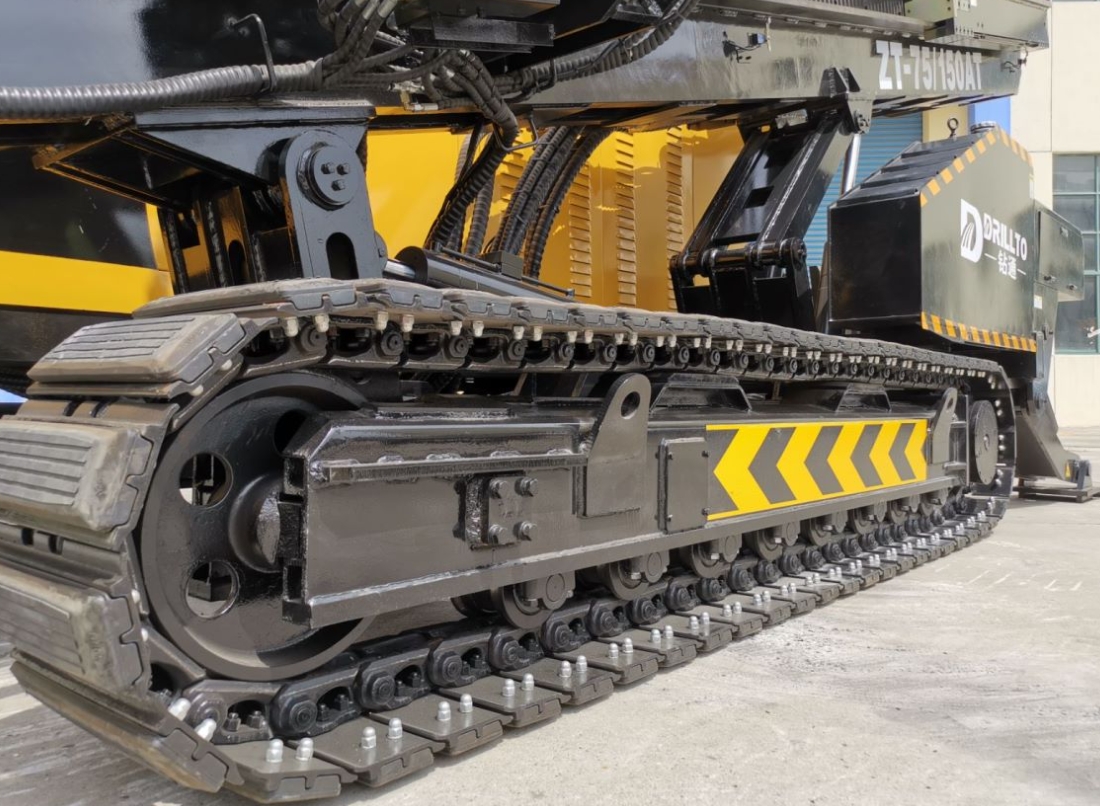
– Structural features:
The main engine is installed on the crawler chassis, with strong passability and off-road capabilities;
It is suitable for operation in harsh construction environments and uneven ground conditions;
Most medium and large HDDs use crawler structures.
– Applicable scenarios:
Complex outdoor terrain, such as mountains, muddy land, and river banks;
Construction of power pipelines and long-distance pipelines;
Regions with poor foundation conditions such as the Middle East and Africa.
– Advantages:
Good stability and strong support;
No foundation treatment is required during operation;
Can carry a larger power system, suitable for high-intensity construction.
– Limitations:
Relatively high cost;
It has a large weight and needs to be transported by a special vehicle;
A large site space is required to lay out the platform.
3. Modular/Split HDD Drilling Rig
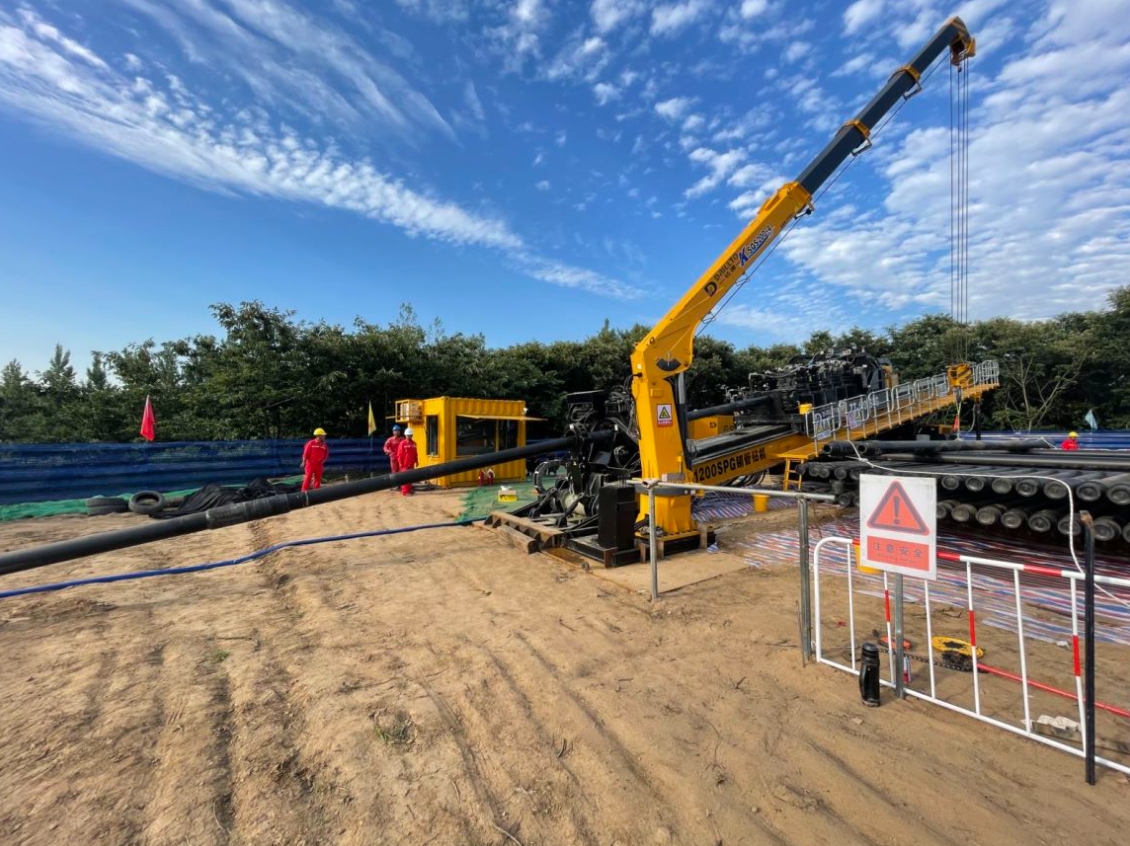
– Structural features:
The main engine and power station are arranged separately;
Can be flexibly combined according to the on-site space;
Commonly used in large HDD long-distance crossing projects.
– Applicable scenarios:
Large-scale engineering projects, directional river crossing;
When overseas remote projects require container transportation.
– Advantages:
Flexible arrangement, adaptable to special working conditions;
Each module can be placed separately, with good working vision and more comfortable operators;
Supports modular expansion of functions, such as automatic towing system, high-definition guidance system, etc.
– Limitations:
Long installation and debugging time;
Requires more professional construction organization and operators;
High system coordination requirements and difficult maintenance.
– Structural type comparison table:
| Type | Floor space | Mobility | Push-pull force level | Application range | Recommended customers/purposes |
| Truck-mounted | Small | Excellent | Small to medium-sized | Frequent transfer Municipal engineering | Repair teams, communication companies |
| Crawler | Medium to large | Medium | Medium to large | Various complex outdoor terrains | Pipeline contractors, construction units |
| Split | Free | Combination required | Medium to extra-large | Special space or international engineering | EPC projects, large state-owned enterprises |
– Summary suggestions:
| Construction conditions/demands | Recommended structural types |
| Urban areas/small spaces/frequent operations | Integrated, truck-mounted |
| Outdoor field construction/complex terrain/long-distance crossing | Crawler |
| Large engineering projects/ultra-long distances/modular transportation needs | Split |
Ⅳ. Classification by application field
Horizontal directional drilling rigs can be divided into the following usage scenarios according to their application objects and engineering requirements in different industries: municipal pipeline construction, power communication crossing, long-distance transmission pipelines, river crossing, oil and gas transportation, international export projects, etc. Each application scenario puts forward different requirements for the technical parameters and configuration of the equipment.
1. Urban Utility Installation
– Application features:
Mainly used for laying water supply pipes, sewage pipes, gas pipes, etc. under urban roads, sidewalks, and green belts;
The strata are mostly backfill soil, sand layers, and pebble layers;
The road surface cannot be excavated, and precise guidance and minimal disturbance are required.
– Recommended equipment:
Small or medium HDD with 20-80 tons of push and pull force;
Highly maneuverable crawler or vehicle-mounted equipment;
Matching small mud recovery device.
– Key requirements:
Precise guidance, minimum footprint;
Low noise, low emissions (urban environmental protection requirements);
Fast entry and exit, efficient transfer capabilities.
2. Power & Telecom Installation
– Application features:
Used for laying optical fiber, power cable, 5G communication pipeline, etc.;
The objects to be crossed are mostly roads and the bottom of buildings;
The construction path is complex and requires high guidance control accuracy.
– Recommended equipment:
Small HDD with 6-30 tons of push and pull force;
The integrated or vehicle-mounted structure is more suitable for rapid construction in urban areas;
Handheld wireless guidance system, portable and fast.
– Key requirements:
Precise orientation and strong path planning capabilities;
Friendly operation interface and convenient training of construction personnel;
Avoid interference with underground optical cable/cable systems.
3. Long-distance pipeline crossing
– Application features:
Applicable to trunk pipeline projects such as oil, natural gas, refined oil, and water resources transportation;
Mostly in suburban or long-distance plains and hills;
Large pipe diameter (above Φ300mm) and long distance (above 500-1500 meters).
– Recommended equipment:
Large HDD with more than 60 tons of push and pull force;
High-flow mud pump, high-pressure mud recovery system;
Wired guidance system + guidance while drilling to detect the annular pressure in the hole.
– Key requirements:
The push and pull force and torque must be large enough;
Strong stability, able to adapt to long-term continuous operation;
Usually cooperate with steel pipe expansion and long-distance backhaul system.
4. River Crossing Projects
– Application characteristics:
Crossing natural obstacles such as rivers, lakes, and wetlands;
Complex strata (underwater silt + pebbles + interlayers);
Long crossing distance and difficult construction.
– Recommended equipment:
HDD more than 100 tons, with crawler or split structure;
Magnetic guidance system with high guidance accuracy;
Support high-density mud to stabilize the hole wall.
– Key requirements:
Precise guidance control to avoid underwater deviation;
Strong pull-back capability to avoid pipeline locking due to insufficient pull-back force;
High safety and environmental protection requirements to prevent mud leakage.
5. Oil & Gas HDD
– Application features:
Crossing mountainous areas, roads, rivers, connecting oil and gas pipelines;
Large pipe diameter, long construction period, extreme environment;
Usually executed by professional oil engineering contractors.
– Recommended equipment:
Specialized large-tonnage HDD (more than 150 tons);
Internationally renowned and reliable drill pipes and drilling tools such as Jiangzuan, Grete, etc.;
Wired guidance and underground monitoring system.
– Key requirements:
Adaptability to extreme climates (high temperature/high cold);
Low failure rate, good performance of main engine hydraulic components;
Strong long-term operation stability.
Ⅴ. Classification by guidance system configuration
The guidance system is a crucial component in the construction of horizontal directional drilling rigs (HDD), which determines the accuracy, safety and construction efficiency of the drilling path. According to the guidance method, control accuracy and working principle, the HDD guidance system can be divided into the following categories:
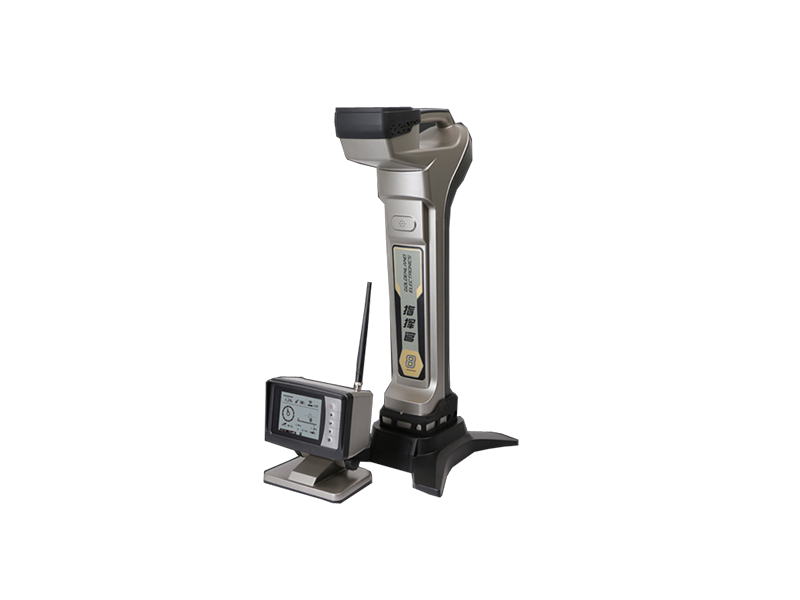
– Technical principle:
The ground operator holds a receiver to receive the signal transmitted by the probe in front of the drill bit;
Real-time acquisition of the depth, inclination, azimuth and other information of the drill bit;
The operator guides the drill rig to adjust the drilling direction according to the signal.
– Applicable scenarios:
Municipal and small power communication projects;
Simple soil layer and short crossing distance;
No strong underground interference sources (such as high-voltage cables, subways, steel pipe networks, etc.).
– Advantages:
Low cost and light equipment;
Simple operation and easy maintenance;
Suitable for entry-level HDD operation or training.
– Limitations:
Poor anti-interference ability;
Not suitable for deep buried or complex underground structures;
Relying on manual tracking, the efficiency is lower than that of the automatic system.
2. Wire-line Magnetic Guidance System
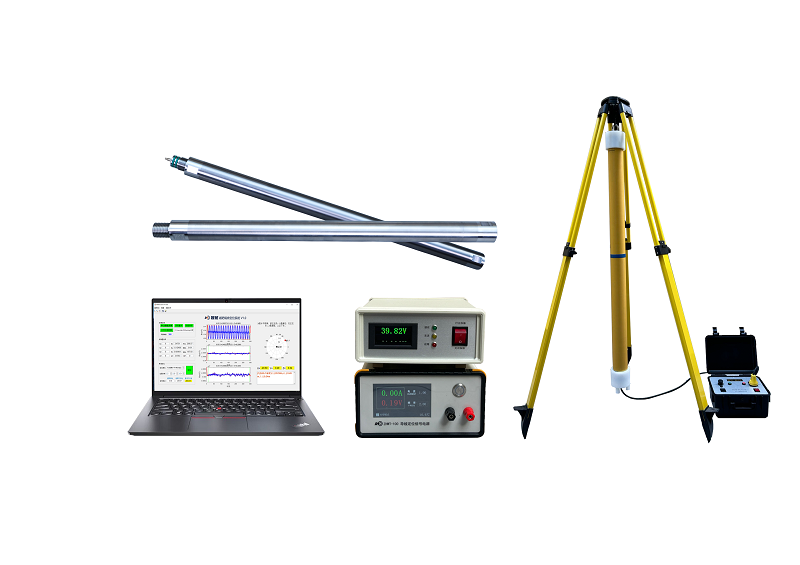
– Technical Principle:
A coil and a magnetic target are laid out above the drilling path;
The drill bit’s built-in sensor receives magnetic signals and calculates the drill bit’s offset and posture in the magnetic field;
The system provides real-time feedback on the three-dimensional drill bit coordinates and guides adjustments.
– Applicable Scenarios:
Medium- and long-distance crossing projects;
There are metal structures or interference environments underground;
When the construction path is inconvenient to track manually.
– Advantages:
Strong anti-interference ability and more stable positioning;
Can be constructed in complex or shielded environments;
High accuracy, suitable for precision crossing.
– Limitations:
The installation and debugging time is long;
High cost, professional operators are required;
The route needs to be designed and planned in advance.
3. Gyro Navigation System
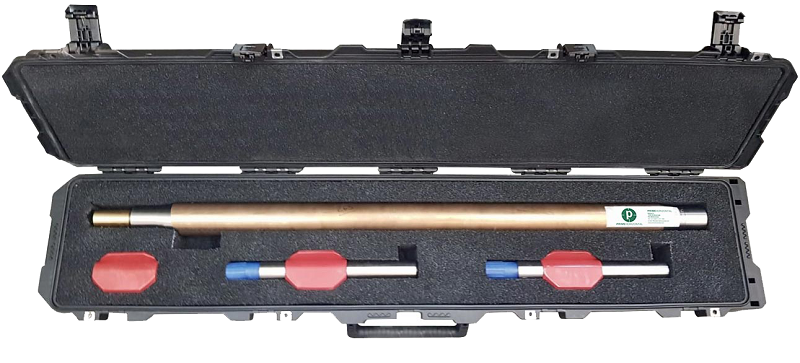
– Technical Principle:
Based on inertial navigation technology, a high-precision gyro sensor is used to record changes in the drill bit direction;
No ground reference or signal line is required;
Automatically record the trajectory and feedback data to the ground control console.
– Applicable scenarios:
Long-distance crossing;
Areas where ground wiring is not allowed or there are high obstacles (such as airports and under railways);
Overseas high-precision infrastructure projects.
– Advantages:
Completely autonomous navigation, no need for manual guidance;
High accuracy and little influence from the surface;
Can operate at night or in closed areas.
– Limitations:
Expensive equipment;
High operating skills required;
Sensor drift requires correction algorithms.
4. MWD + Real-time Monitoring System
– Technical principle:
Install multi-point sensors (pressure, direction, temperature, etc.) while drilling;
Real-time feedback of drill bit information via radio or optical cable;
The ground system analyzes the drill bit working conditions in real time and automatically optimizes drilling parameters.
– Applicable scenarios:
High-risk geological areas (landslides, caves, geothermal);
Precision crossing projects that require real-time monitoring of drilling status;
Exists as an auxiliary system in large HDD projects.
– Advantages:
Real-time visual control improves construction safety;
Can be combined with data modeling system for predictive control;
Suitable for use with automatic control HDD.
– Limitations:
Extremely high cost, suitable for large EPC or customized projects;
Construction personnel need to have basic knowledge of sensor systems.
– Guidance system type comparison table:
| Guidance system type | Accuracy level | Cost | Construction efficiency | Applicable project type |
| Walk-over Locating System | General | Low | Medium | Municipal, telecommunications, communication entry-level projects |
| Magnetic guidance system | High | Medium | High | Medium- and long-distance complex stratum crossing |
| Gyro Navigation System | Very high | High | High | High precision, large-scale crossing projects |
| MWD real-time monitoring system | Very high | Very high | Very high | International energy projects/high-risk work areas |
– Recommended selection reference:
| Project requirements | Recommended guidance system type |
| Municipal small operations, limited budget | Walk-over Locating System |
| Urban pipe network crossing, metal interference | Magnetic guidance system |
| Railway/airport underpass, ultra-long distance river crossing project | Gyro Navigation System |
| High-risk areas, international high-standard projects | MWD real-time monitoring system |
In addition, horizontal directional drilling rigs can also be divided into horizontal directional drilling rigs and all-terrain horizontal directional drilling rigs.
1. Applicable stratum range
Ordinary horizontal directional drilling rigs:
Mainly suitable for medium-soft strata, such as clay, sand, pebble layer, partially weathered rock, etc.;
When encountering hard strata (such as intact rock layer, strong weathering or above), the efficiency is greatly reduced, and even construction cannot be carried out.
All-Terrain HDD rigs:
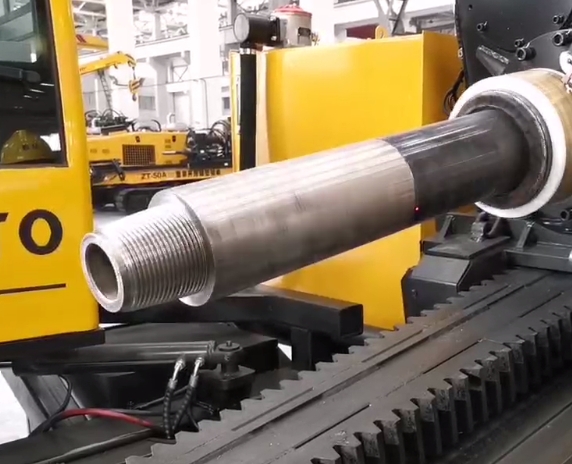
Adopting an internal and external dual drill rod structure, it can cope with a wide range of geology from soft soil to hard rock;
It can adapt to complex geological conditions such as pebble layer, gravel layer, hard rock, shale, etc.
2. Structure and drive mode
General HDD rigs:
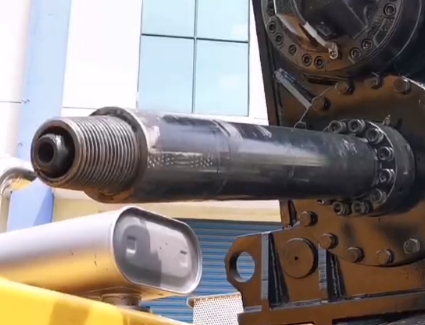
Adopting a single rod structure, power transmission and mud channel share the same drill rod;
The power head drives the drill rod to rotate, and uses mud to cool and transport drill cuttings.
All-terrain HDD rigs:
Adopts a double-rod structure: the outer rod controls the push and pull back, and the inner rod rotates independently to drive a special drill bit (such as PDC or roller cutter);
The inner rod provides stable torque output, suitable for cutting rocks, and the structure is similar to a core drill.
3. Different construction efficiency and stability
General HDD rigs:
High efficiency and low cost in suitable strata;
When the strata change is large or there is a hard layer, the efficiency drops sharply, and the drill may even get stuck or burn the drill bit.
All-terrain HDD rigs:
Possessing stable crossing ability and strong rock cutting ability;
More suitable for long-distance, large-caliber, and complex geological crossing construction.
4. Equipment cost and maintenance complexity
General HDD rigs:
Low cost, suitable for small and medium-sized projects;
Relatively simple operation, low maintenance cost.
All-terrain HDD rigs:
High cost, complex structure, higher requirements for operators and maintenance personnel;
More suitable for high-end markets or professional construction companies.
Summary comparison table:
| Item | General HDD rigs | All-terrain HDD rigs |
| Formation adaptability | Soft to medium formation | Soft soil ~ hard rock |
| Drill rod structure | Single rod | Double rod (inside and outside coaxial) |
| Rock penetration ability | Weak | Strong |
| Cost | Low | High |
| Application scenario | Urban small and medium-sized pipeline crossing | Long distance, complex geology, large diameter crossing |
After browsing this article, if you still can’t confirm which hdd rig is suitable for your projects, welcome to contact us.
Our professional sales and experienced engineers will provide you solutions based on your needs.
Email: drillto@hddmaster.com