


In horizontal directional drilling (HDD) operations, the drilling fluid—often called “mud” on site—is frequently the decisive factor between project success and failure. Whether you are installing utility lines beneath city streets or performing long-distance river crossings, a well‑engineered drilling fluid system is the core guarantee of safety and efficiency.
However, many field crews still treat drilling fluid as simply “add some bentonite, stir it, and go.” In reality, HDD mud engineering is a systematic discipline that blends materials science, fluid mechanics, and geotechnical knowledge. This article provides a comprehensive guide from three critical dimensions—bentonite mixing, viscosity control, and borehole stability—to help frontline operators build a truly reliable “liquid casing” for every job.
Why Is HDD Drilling Fluid So Important?
Before diving into specific techniques, it is essential to understand the multiple roles that drilling fluid plays in HDD construction. A properly formulated mud system must accomplish at least four key tasks:
Cuttings transport – Suspend and carry drill cuttings out of the borehole, preventing them from accumulating at the bottom. Poor hole cleaning will increase torque and thrust resistance; in severe cases, it can lead to stuck pipe.
Borehole stability – Form a dense filter cake (mud cake) on the borehole wall to prevent collapse and maintain the hole shape.
Cooling and lubrication – Reduce the temperature of the bit and downhole tools (bit temperatures above 220°F can permanently damage transmitter sondes), while lowering friction between the drill pipe and the borehole wall.
Hydraulic power transmission – Provide hydraulic energy for downhole motors and other tools.
Without a qualified drilling fluid, HDD work becomes nearly impossible.
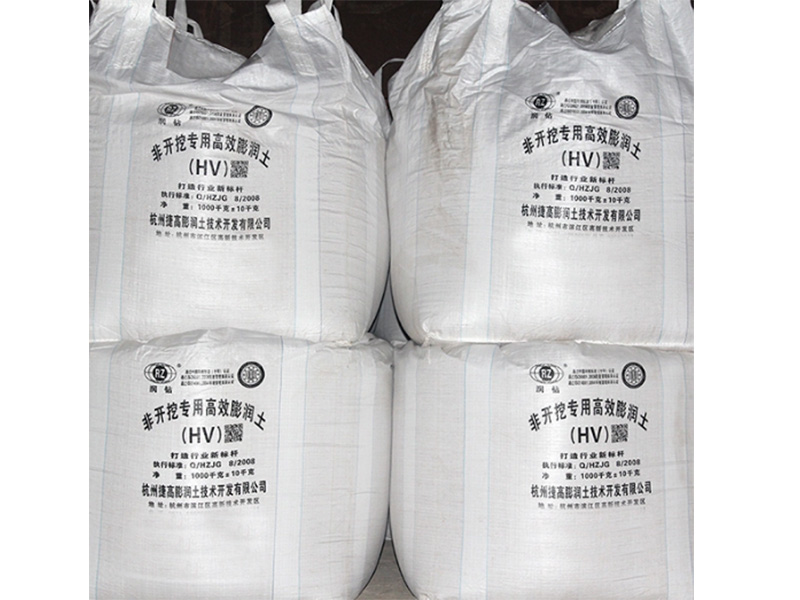
Bentonite Mixing: The Foundation of High–Quality Mud
Why Choose Sodium Bentonite?
Bentonite is the most essential base material for HDD drilling fluids—it is practically a standard additive on every rig. However, not all bentonites are suitable for HDD applications.
Always use sodium bentonite (either natural or artificially sodium-activated). The sodium ions between the montmorillonite layers allow full swelling, with water absorption up to 8‑15 times its own weight, swelling volume at least 20 times, and yield at least 15 m³ per metric ton. In contrast, calcium bentonite is inferior in flowability, thixotropy, and contamination resistance.
For high-quality HDD bentonite, the montmorillonite content should be at least 75% (first-grade standard), with premium products reaching 80% or more. Sand content must be kept below 3% (≤2% for pilot‑hole drilling); otherwise, sand particles will wear down equipment and clog the circulation system.
Proper Bentonite Mixing Procedure
Mixing bentonite is not simply “dump and stir” – it requires strict procedural discipline.
Step 1: Check the water pH. Drilling fluid additives (bentonite and polymers) mix best in water with a pH of 8-9. If the water source is acidic or has high hardness (high calcium/magnesium ions), add soda ash (sodium carbonate) to adjust the pH to 8.5‑10. Hard water can cause bentonite flocculation and a sudden loss of viscosity.
Step 2: Add water first, then bentonite. Fill the mixing tank or mud pit with clean water first, then slowly and evenly add the bentonite. Never pour water onto dry bentonite —— this causes clumping and incomplete hydration.
Step 3: Thorough mixing and hydration. Bentonite requires sufficient time to fully hydrate and swell. A minimum mixing time of 30‑40 minutes is recommended; for directional crossing projects, one hour is preferable. High‑speed jet mixing systems (using a venturi nozzle and hopper) can significantly improve efficiency.
Step 4: Add polymers (if needed). If you plan to add PAC polymers, xanthan gum, or other additives, they must be added after the bentonite is fully mixed and hydrated – typically wait about 10 minutes.
Typical Mix Ratios (Reference)
The following table provides reference dosages for different formations:
| Formation Type | Bentonite per m³ water | Recommended Additives |
| General soils | 25-35 kg | Soda ash 0.5-1 kg, CMC 0.1-0.3 kg |
| Sand / collapsible zones | 35-50 kg | Soda ash 0.8-1.2 kg, PAM 0.05-0.1 kg |
| Trenchless directional drilling | 30-40 kg | Fluid-loss reducer 3-5 kg, lubricant 1-2 kg |
Note: These are reference values only. Actual dosages must be adjusted based on site‑specific formation conditions, hole diameter, and crossing length.
Viscosity Control: The “Weather Vane” of Mud Performance
What Is Marsh Funnel Viscosity?
On HDD job sites, the most common viscosity measurement tool is the Marsh funnel. The procedure is simple: block the bottom outlet with a finger, pour the mud through the screen until the funnel is full, then release the finger and start timing. Record the time (in seconds) required for one quart (approximately 500 mL or 32 ounces) of mud to flow out. Fresh water has a standard outflow time of about 26 seconds.
Target Viscosity Ranges for Different Formations
The target viscosity for HDD drilling fluids typically falls between 45‑60 seconds (Marsh funnel) . However, the exact value must be flexibly adjusted based on formation conditions:
| Formation Type | Recommended Viscosity (seconds) | Remarks |
| Clay / silty clay | 30-45 | Avoid excessively high viscosity that increases resistance |
| Fine sand | 45-65 | Enhance sand-carrying capacity |
| Coarse sand / gravel | 60-80 | Need stronger suspension ability |
| Rock formations | 80-100 | Improve suspension and lubrication |
Viscosity is not always better when higher. Excessively high viscosity increases drag and downhole circulating pressure, raising the risk of formation fracturing (frac‑out). Too‑low viscosity fails to carry cuttings effectively – cuttings will settle at the bottom forming a “cuttings bed,” which triggers a cascade of subsequent problems.
Viscosity Monitoring Frequency
During drilling, measure mud viscosity at least every 2 hours. In sand layers or zones prone to fluid loss, increase the frequency to at least once per hour. If the viscosity deviates from the target, adjust promptly – add bentonite or viscosifiers when too low, or add water to dilute when too high.
Borehole Stability: The Ultimate Mission of Mud
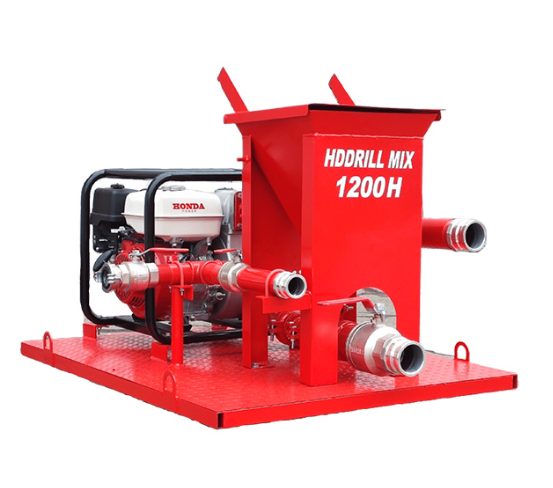
Consequences of Borehole Instability
Borehole stability is the most critical – and often overlooked – aspect of HDD mud engineering. When the borehole becomes unstable, the consequences range from increased torque and pullback resistance to hole shrinkage, collapse, stuck pipe, and even scrapped drill strings.
In a real‑world 4,400‑foot long‑distance crossing, the contractor initially used a 45‑second viscosity mud. When encountering unexpected loose sand layers, the borehole began to fail – push/pull forces rose, rotational torque increased, and returns were intermittent. The root cause was that the mud’s gel strength and filter cake quality were insufficient to support the loose sand wall. After raising viscosity to 50‑55 seconds and adding xanthan gum polymer, the problem was resolved.
Filter Cake – The “Second Pipe Wall”
The primary mechanism by which bentonite mud maintains borehole stability is forming a filter cake (mud cake) . As the mud penetrates the formation under pressure, the tiny plate‑like bentonite particles “shingle” across the borehole wall, creating a dense, low‑permeability cake. This cake serves to:
· Prevent free water from continuing to leak into the formation, avoiding formation swelling or strength loss.
· Physically support the borehole wall, preventing loose particles from sloughing.
· Reduce fluid loss, maintaining the mud column pressure.
An ideal filter cake should be thin and tough (≤2 mm thick), dense, and not easily dislodged. The API standard requires fluid loss ≤15 mL/30min; in sand and rock formations, it should be ≤10 mL/30min.
Gel Strength and Thixotropy
Beyond the filter cake, gel strength and thixotropy are equally vital for borehole stability.
Gel strength refers to the mud’s ability to form a gel structure when left static. High‑quality HDD bentonite should meet: 10‑minute gel strength ≥3 Pa, and 30‑minute gel strength ≥5 Pa. This ensures that during pump‑off connections, cuttings do not settle to the bottom and cause a stuck‑pipe incident.
Thixotropy describes the property of “thinning when stirred, thickening when static” – viscosity drops during pumping for easy flow, and recovers when static to suspend cuttings. Premium bentonite must achieve this dynamic balance of “easy to pump when agitated, stable when still.”
Quick‑Reference Mud Programs by Formation
The following table summarises additive recommendations for various ground conditions:
· Non‑reactive clays – Bentonite (primary fluid‑loss control) + soap/detergent (to keep tools clean)
· Reactive clays – Bentonite + PAC polymer (secondary fluid‑loss control) + PHPA polymer (to prevent clay swelling) + detergent
· Sand – Bentonite + PAC polymer (secondary fluid‑loss control) + high‑molecular‑weight polymer (suspension aid)
· Gravel / cobbles – Bentonite + PAC polymer + high‑molecular‑weight polymer
· Rock / fractured rock – Bentonite + high‑molecular‑weight polymer (suspension aid), plus PAC polymer if needed
Summary
HDD drilling fluid is far more than “a bag of bentonite mixed with water.” From selecting the right sodium bentonite, to strict mixing and hydration procedures, to formation‑based viscosity precision control – every step directly impacts final borehole stability and overall project success.
Keep these core principles in mind:
· Choose quality materials – prioritise sodium bentonite with high montmorillonite content.
· Hydrate thoroughly – mix for at least 30 minutes; for directional crossings, aim for 1 hour.
· Match viscosity to the ground – adjust targets per formation: 45‑65 s for sand, 80‑100 s for rock.
· Monitor in real time – measure viscosity every 2 hours and correct deviations immediately.
· Value the filter cake – low fluid loss, thin and tough cake is the foundation of borehole stability.
Scientific mud management is a skill that requires continuous learning and field practice. Master these three technical pillars – bentonite mixing, viscosity control, and borehole stability – and your HDD operations will become safer, more efficient, and more reliable.