


Tricone drill bits are essential tools in drilling operations across oil and gas, water well drilling, mining, and construction. If you’re wondering how does a tricone drill bit work, this guide breaks down their structure, working principle, and key functions—designed to help you understand their role in efficient, reliable drilling.
Unlike other drilling bits, tricone drill bits use a unique three-cone design that delivers superior performance across soft, medium, and hard rock formations. Their ability to crush, chip, and grind rock makes them a top choice for drilling professionals worldwide—including in Horizontal Directional Drilling (HDD) applications. HDD, widely used for underground utility installation (e.g., pipelines, cables), relies specifically on milled tooth and TCI tricone bits to tackle diverse subsurface formations. Below, we explain exactly how does a tricone drill bit work, from their core components to their step-by-step operation, including their specialized use in HDD.
Key Components of Tricone Drill Bits (Critical for How They Work)
To understand how does a tricone drill bit work, you first need to know their key parts. Every high-quality tricone drill bit includes these essential components, each playing a role in its performance:
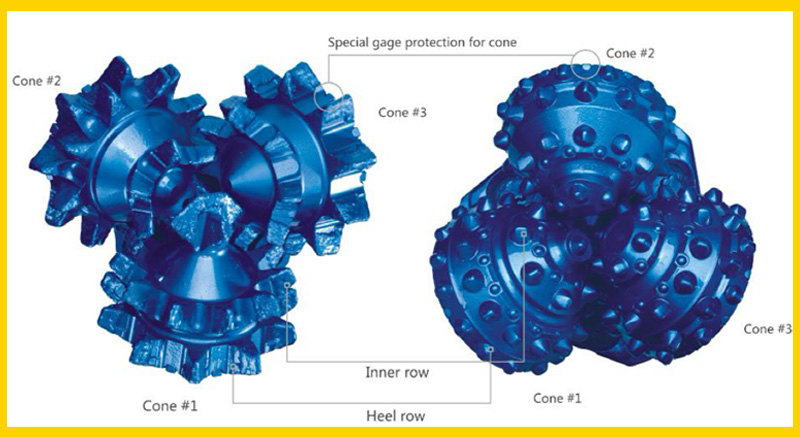
1. Three Rotating Cones
The “tricone” in tricone drill bits refers to the three cone-shaped rollers at the bottom of the bit. These cones rotate independently as the drill string turns, ensuring constant contact with the rock formation. This independent rotation is what makes tricone drill bits effective at breaking even hard, abrasive rock.
2. Cutting Teeth or Carbide Inserts
Each cone is equipped with cutting teeth—either steel teeth for soft to medium formations or tungsten carbide inserts (TCI) for hard, abrasive rock. These teeth are the part of the tricone drill bit that directly breaks the rock, using a combination of pressure and rotation.
3. Bearing System
A durable bearing system supports the rotation of the three cones. Sealed roller or ball bearings, paired with high-temperature lubrication, ensure the cones rotate smoothly even under extreme pressure and heat—critical for long-lasting tricone drill bit performance.
4. Nozzles & Drilling Fluid Pathways
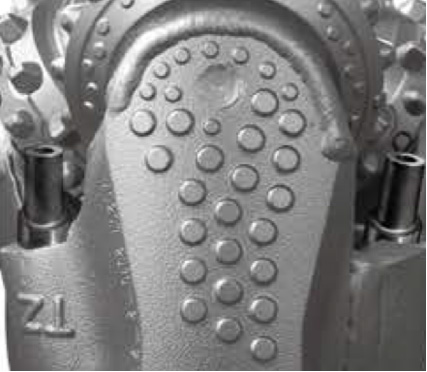
Tricone drill bits feature built-in nozzles that direct drilling fluid (mud) to the bottom of the borehole. This fluid is essential to how does a tricone drill bit work: it cools the cones and teeth, flushes rock cuttings to the surface, and lubricates the bearings to prevent wear.
5. Bit Body & Drill String Connection
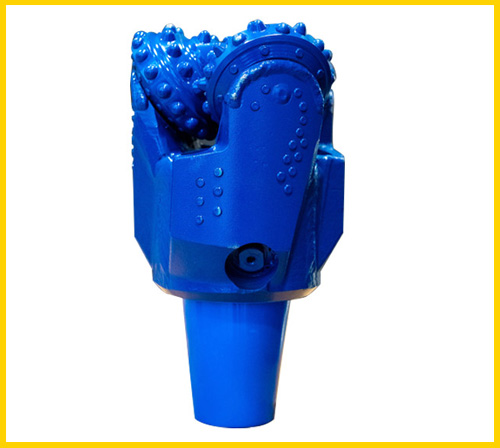
The bit body connects all components, while the top connection attaches the tricone drill bit to the drill string. This connection ensures torque is transferred from the drill string to the bit, powering the rotation of the cones.
how does a tricone drill bit Work: Step-by-Step Process
Now that you know the components, let’s break down exactly how does a tricone drill bit work during a typical drilling operation. The process relies on three key forces: weight on bit (WOB), rotation, and drilling fluid circulation.
Step 1: Applying Weight & Rotation
The drill string applies downward pressure (weight on bit) to push the tricone drill bit firmly against the rock surface. At the same time, the drill string rotates, turning the entire tricone bit assembly. This combination of weight and rotation is the foundation of how does a tricone drill bit work.
Step 2: Cone Rotation & Rock Breaking
As the tricone drill bit rotates, each of the three cones rolls independently across the bottom of the borehole. The teeth or carbide inserts on the cones impact the rock with high pressure, breaking it in three ways: crushing (for brittle rock), chipping (for fragmented rock), and grinding (for hard, abrasive formations). This rolling action ensures even wear and efficient rock removal.
Step 3: Drilling Fluid Circulation
Drilling fluid is pumped through the drill string and out the tricone drill bit’s nozzles. This fluid cools the cones and cutting teeth (preventing overheating), flushes rock cuttings up to the surface (keeping the borehole clean), and lubricates the bearings (extending the bit’s life). Without proper fluid circulation, tricone drill bits would wear out quickly and drilling efficiency would drop.
Step 4: Continuous Drilling Progress
As the cones break the rock, the tricone drill bit advances deeper into the formation. The three-cone design balances the load, reducing vibration and ensuring smooth, consistent drilling. This balance is what makes tricone drill bits more reliable than many other drill bit types.
Types of Tricone Drill Bits & Their Applications
how does a tricone drill bit work can vary slightly depending on the type, which is designed for specific formations. The two main types are:
1. Steel Tooth Tricone Bits
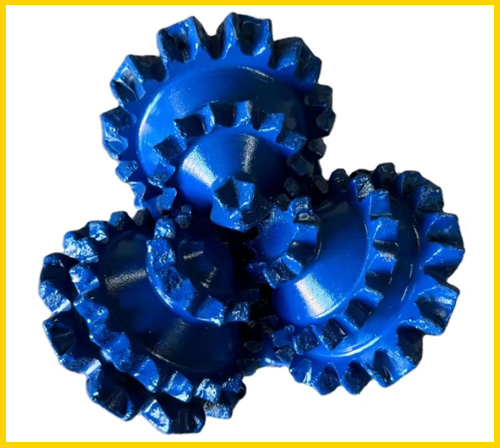
Steel tooth tricone drill bits are ideal for soft to medium formations (e.g., sand, clay, soft limestone). Their sharp, forged steel teeth deliver high penetration rates, making them perfect for water wells, shallow drilling, and soft sedimentary layers. Within the HDD industry, milled tooth tricone bits— a type of steel tooth bit manufactured via milling process—are the go-to choice for softer HDD formations, as their precision-milled teeth provide smooth, efficient drilling while minimizing borehole deviation, a key concern in horizontal directional drilling.
2. Tungsten Carbide Insert (TCI) Tricone Bits
TCI tricone drill bits feature hard tungsten carbide inserts, making them suitable for hard, abrasive, and fractured formations. They are commonly used in oil and gas drilling, hard rock mining, deep well drilling—where durability and efficiency are critical—and in HDD projects, where they excel at drilling through tough, compacted subsurface layers.
Why Tricone Drill Bits Are a Top Choice for Drilling
Understanding how does a tricone drill bit work helps explain why they are widely used in the industry. Their key advantages include:
- Wide formation adaptability: Works in soft, medium, hard, and abrasive rock.
- Durability: Robust bearing systems and wear-resistant teeth extend service life.
- Stable performance: Three-cone design reduces vibration and minimizes borehole deviation.
- High efficiency: Fast penetration rates reduce drilling time and operational costs.
If you’re searching for how does a tricone drill bit work, look no further. Tricone drill bits use three rotating cones with cutting teeth or carbide inserts to break rock through a combination of weight, rotation, and drilling fluid circulation. Their durable design and adaptability make them essential for oil and gas, water well, mining, construction, and Horizontal Directional Drilling (HDD) applications. In HDD, milled tooth tricone bits (for soft to medium subsurface layers) and TCI tricone bits (for hard, abrasive HDD formations) are the preferred choices, ensuring efficient, precise drilling for underground utility projects. Whether you need steel tooth, milled tooth, or TCI tricone drill bits, understanding their working principle helps you select the right tool for your project.
For high-quality tricone drill bits that deliver reliable performance, contact our team. We supply durable tricone drill bits for all drilling applications, backed by expert support to help you optimize your drilling operations.