


In the field of trenchless engineering, guidance and positioning for directional drilling are critical factors that determine the success or failure of a project. The accuracy of the pilot hole’s trajectory directly affects the success of subsequent reaming and pullback operations. If the trajectory deviates from the designed route, it may not only damage existing underground pipelines but could also render the entire crossing project unusable.
Currently, guidance for trenchless directional drilling primarily relies on two core technologies: wireless guidance systems and wireline guidance systems. These two technologies follow different approaches, offer distinct performance characteristics, and are suited for entirely different construction scenarios. So, how should one choose a directional drilling guidance system? This article will provide a systematic comparison based on technical principles, performance parameters, and applicable scenarios to help project decision-makers make the most appropriate choice.
Wireless Guidance System: A Flexible and Convenient “Ground Tracker”
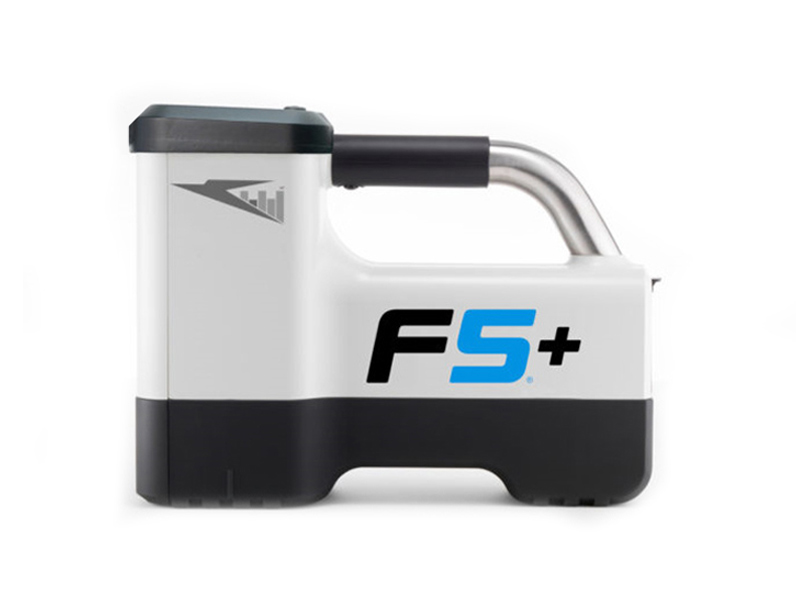
1. Technical Principles
A wireless guidance system consists of two core components: a signal transmitter and a signal receiver. During construction, a signal transmitter (a probe) is pre-installed inside the guide bit, which continuously transmits electromagnetic signals at a specific frequency to the outside; ground operators use a handheld receiver (a walk-over system) to capture these signals and, based on parameters such as signal strength and propagation direction, determine the position and orientation of the guide bit in real time.
The probe integrates components such as an inclination sensor and signal processing and transmission units, which measure parameters such as the drill string’s inclination and tool face angle. These measurements are transmitted to the ground-based positioning tracker via an emission coil in the form of wireless electromagnetic waves.
2. Key Advantages
Easy to Operate and Quick to Learn: The wireless guidance system eliminates the need for complex wiring. Operators can perform tracking and measurement simply by holding a receiver, requiring relatively low technical skill.
High Construction Efficiency and Low Cost: Since there is no need to wire each drill pipe, operation time is short and equipment investment costs are low, making it ideal for small and medium sized projects with tight schedules.
Flexible and Mobile: The system is lightweight and can be moved freely within the construction area, unrestricted by fixed equipment.
3. Major Limitations
Limited Detection Depth: This is the most significant shortcoming of wireless guidance. Its effective detection depth generally does not exceed 15 meters; if the maximum depth of the project exceeds 15 meters, the wireless guidance system will struggle to perform adequately.
Weak Interference Resistance: Wireless signals are easily affected by the external environment. Active interference sources—such as power transmission cables, signal transmission towers, and substations—as well as passive interference sources—such as underground metal pipes and high-salinity strata—can all cause signal distortion or attenuation.
Requires Real-Time Manual Tracking: Operators must remain directly above the drill bit at all times to perform tracking measurements, which poses significant challenges when crossing impassable areas such as rivers or built-up areas.
Wireline Guidance System: The “Precision Navigator” for Long-Distance, Deep-Buried Applications
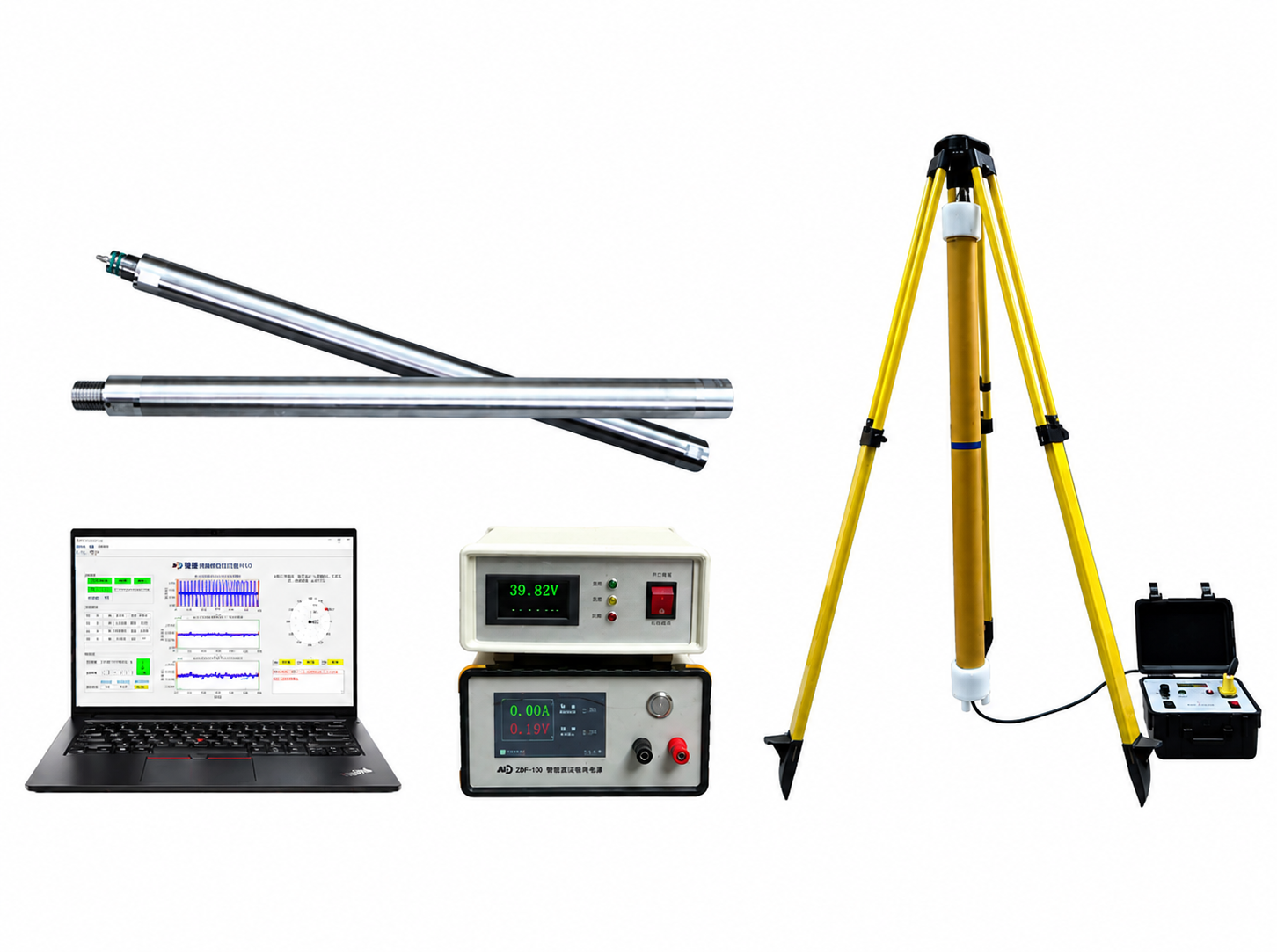
1. Technical Principles
The core principle of the wireline guidance system is to achieve positioning by utilizing the stability of the Earth’s magnetic field. Through a wireline guidance probe installed within a non magnetic drill collar, the system measures in real time the angle between the drill bit’s direction of travel and the horizontal projection of the Earth’s magnetic field lines. Within a limited construction zone, the horizontal component of Earth’s magnetic field can be regarded as sufficiently stable for calculation purposes.
Using the drilling entry point as the origin, specialized calculation software can precisely determine the horizontal distance of the guided drill bit, the drilling depth, and the left-right deviation relative to the preset drilling reference line. The wireline guidance instrument integrates magnetic field sensors and gravity sensors to measure key parameters such as azimuth, inclination, and tool angle.
2. Key Advantages
Unlimited Detection Depth: The signal transmission capability of the wireline steering system is not limited by construction length, making it suitable for large-scale crossing projects. In actual domestic engineering projects, there have been successful cases with crossing depths reaching 102.9 meters.
No Need for Ground-Based Monitoring: Unlike wireless steering, wireline steering does not require a steerer to monitor the area directly above the drill bit in real time. This offers a decisive advantage in inaccessible scenarios such as crossing rivers, lakes, and densely built-up areas.
High Interference Resistance: Wired wireline guidance systems transmit signals via physical cables, demonstrating greater stability in environments with complex electromagnetic interference. Wireline guidance technology has been widely applied in large-scale trenchless projects such as urban gas outer-ring networks and long-distance transmission pipelines.
High Accuracy: Taking the SmartDrill series of wireline guidance instruments as an example, azimuth accuracy is maintained within ±0.15°, inclination accuracy within ±0.1°, and tool face accuracy of ±0.1°.
3. Major Limitations
Higher equipment costs: Wireline guidance systems require specialized ground interface panels, computers, driller displays, and other supporting equipment, resulting in higher overall investment compared to wireless guidance systems.
Relatively complex operations: Wired wireline guidance systems require wiring for each drill pipe section, placing high demands on operational standardization and sealing integrity.
Susceptibility to interference from magnetic materials: The azimuth accuracy of wireline steering systems is easily affected by external environmental interference, particularly from ferromagnetic materials, cables, and high-voltage power lines. During operations, ground-based artificial magnetic beacons must be set up to compensate for azimuth deviations.
Wireless Guidance vs. Wireline Guidance: A Comprehensive Comparison Across Five Dimensions
| Dimensions of comparison | Wireless Guidance System | Wireline Guidance System |
| Detection depth | ≤15 m | No depth limit (102.9 m achieved) |
| Tracking methods | Ground-based tracking by personnel | No ground tracking required |
| Immunity to interference | Weak; susceptible to electromagnetic interference | Strong (cable system) |
| Operational complexity | Simple | More complex |
| Equipment costs | Low | High |
| Applicable project scale | Medium and small | Large and medium-sized |
How to Choose? Decision Guide for Four Key Scenarios
Scenario 1: Shallow, Small-to-Medium-Scale Urban Crossings → Choose Wireless Guidance
For urban utility projects—such as gas, telecommunications, and power lines—with burial depths of 15 meters or less and relatively short crossing distances, wireless guidance systems offer the best value for money. Their ease of operation and low cost provide significant advantages for small-to-medium-scale projects with tight schedules.
However, please note: Before construction begins, assess the on-site electromagnetic environment to ensure there are no strong sources of interference, such as high-voltage power lines or substations, in the vicinity.
Scenario 2: Crossing Rivers, Lakes, or Building Complexes → Choose Wireline Guidance
When obstacles such as rivers, buildings, or roads lie above the crossing path—making it impossible to deploy personnel for ground tracking—a wireline guidance system is the only viable option. The technical feature of wireline guidance, which does not require ground tracking, gives it an irreplaceable advantage in large-scale crossing projects such as river crossings and mountain tunnels.
Scenario 3: Long-distance crossings at depths exceeding 15 meters → Select Wireline Guidance
For large-scale projects with crossing depths exceeding 15 meters and distances exceeding several hundred meters (such as long-distance oil and gas pipelines and large-scale municipal main networks), wireless guidance systems can no longer meet the requirements. Since the signal transmission of wireline guidance systems is not limited by length or depth, they are the standard choice for such projects.
Scenario 4: Complex Environments with Severe Electromagnetic Interference → Choose Wireline Guidance
In areas such as urban centers and industrial zones, where underground metal pipelines crisscross and the electromagnetic environment is complex, wireless guidance systems are prone to signal drift. Wired wireline guidance systems, leveraging the advantages of physical cable transmission, can effectively avoid electromagnetic interference, ensuring the accuracy and stability of guidance and positioning.
There Is No “Best,” Only “Most Appropriate”
The selection of guidance technology for trenchless directional drilling is, at its core, a balancing act between cost, efficiency, and reliability.
Wireless guidance systems are suitable for “shallow, short, and simple” scenarios—where burial depth is shallow, distances are short, and environments are straightforward—and prioritize speed and cost-effectiveness.
Wireline guidance systems are suitable for “deep, long, and difficult” scenarios—where burial depth is significant, distances are long, and environments are complex—prioritizing precision and reliability.
It is worth noting that wireless-transmission wireline guidance systems, which integrate both technologies, have now appeared on the market. While retaining the high-precision advantages of wireline guidance, they resolve the cumbersome issue of wired connections through wireless communication technology. Such hybrid products are becoming a new trend in the field of trenchless directional drilling guidance.
No engineering project is trivial; guidance determines success or failure. When selecting a guidance instrument for trenchless directional drilling, it is recommended that engineering teams first assess three key factors—project depth, path conditions, and electromagnetic environment—and then make an informed decision based on the comparative analysis presented in this article. Choosing the right guidance technology not only ensures engineering quality but also demonstrates a commitment to construction safety and investment returns.