


In horizontal directional drilling operations, the selection of a reamer directly impacts the success, efficiency, and cost of the project. Selecting the wrong tool can result in minor issues such as schedule delays and excessive equipment wear, or major problems like drill string jamming and the scrapping of the borehole. Choosing the right reamer, on the other hand, not only significantly improves construction efficiency but also effectively reduces drag resistance during pipe pullback and minimizes crossing risks.
So, how do you correctly select an HDD reamer based on different geological conditions? This article will provide a comprehensive guide to selecting HDD reamers based on the characteristics of various geological formations.
Why Is Reamer Selection So Important?
HDD construction typically involves three key stages: pilot hole drilling, reaming, and pipe pullback. The reaming stage involves enlarging the pilot hole to the final pipe diameter; it is also the riskiest phase of the entire project and places the greatest load on the equipment.
Different types of reamers are designed for different formations—a tool that performs excellently in sandy layers may fail completely in clay. An incorrect selection can lead to problems such as surging torque, poor cuttings removal, and drill string sticking; once issues arise, remedial work is both time-consuming and costly. Therefore, selecting a well-designed reamer tailored to specific conditions is a core skill that every HDD professional must master.
Four Major Types of Reamers and Their Characteristics
Before delving into reamer selection for different formations, let’s first understand the four most commonly used types of reamers on the market today and their key features:
| Types of Reamers | Key Features | Typical applicable strata |
| Fly Cutter Reamer | Open-wing design, aggressive cutting, and unobstructed chip evacuation channels | Clay, silty soil, loam, soft sand layers |
| Fluted Reamer | Featuring spiral or straight-groove flow channels, these combine cutting and flow-guiding capabilities and offer good stability | Mixed strata (alternating layers of clay, sand and gravel), moderately hard soil |
| Barrel Reamer | Closed cylinder with strong support from the bore walls and uniform load distribution | Loose sand layers, gravel layers, and unstable strata |
| Hole opener(rock reamer)(including roller bit/cutter and PDC) | Utilises roller cone crushing or diamond shearing for rock breaking; offers exceptional wear resistance | Various types of rock (soft rock, medium-hard rock, hard rock) |
Strategies for Selecting Reamers Under Different Geological Conditions
Soft Soil Formations (Clay, Silt, Loam)
Formation Characteristics and Challenges:
Clay and silt are typical soft soil formations that appear simple but actually harbor hidden risks. The biggest problem is the “mud packing” phenomenon—drilling cuttings adhere to the reamer, forming mud clumps that obstruct cuttings discharge and cause a sharp increase in torque. Additionally, excessive rotation in clay can lead to heat buildup, further exacerbating clogging.
Recommended Reamer Types:
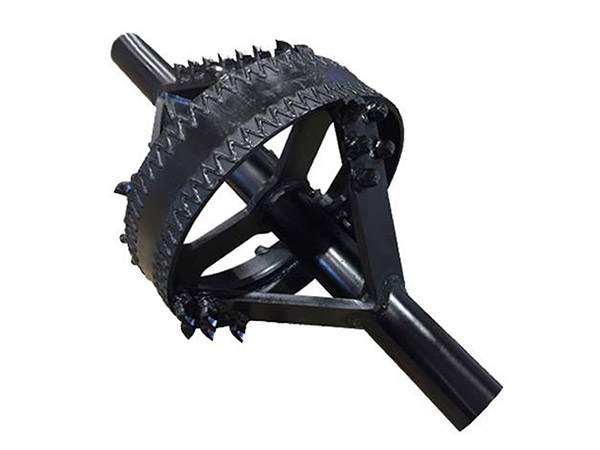
Fly Cutter Reamer: The open-wing design is the preferred choice for clay conditions. Select a design with fewer wings (e.g., three wings) and sharper cutting angles, combined with larger fluid ports to enhance mud mixing and cuttings removal, which can effectively prevent clay buildup.
When encountering extremely soft and highly viscous clay, prioritize wide-channel models among flow-channel reamers to use the flow channels to forcibly guide cuttings away from the tool surface.
Operational Key Points:
Maintain high mud flow rate and viscosity to ensure that soft soil cuttings remain suspended and are smoothly discharged.
Use a mud formulation containing clay inhibitors to reduce clay adhesion.
Sand and Gravel Layers (Non-cohesive Soils)
Formation Characteristics and Challenges:
Sand and gravel layers are classified as non-cohesive soils; the primary threats to reamers are high abrasiveness and borehole wall instability. Sand grains and gravel continuously wear down the cutting teeth and wing plates, shortening tool life; simultaneously, the loose structure makes borehole wall collapse highly likely, resulting in a high risk of drill bit jamming.
Recommended Reamer Types:
Barrel Reamer: The barrel body provides effective support to the borehole wall, reducing the likelihood of collapse. At the same time, its uniform contact surface minimizes localized wear, making it suitable for medium- to coarse-grained sand and gravel layers.
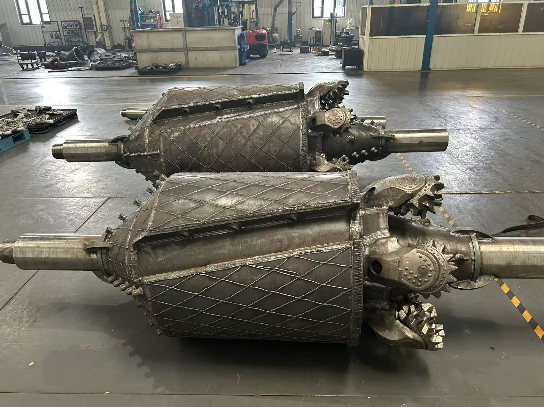
Fly cutter reamer: If the formation contains a small amount of gravel and the bore diameter is small, select a cutting-type reamer with a higher number of wings (four or five wings) and apply extensive hard-facing welds to the cutting teeth and wing edges to enhance wear resistance.
Operational Guidelines:
Increase mud flow rate and velocity to ensure sand and cuttings are promptly flushed out of the borehole, preventing sand accumulation.
Appropriately reduce rotational speed to minimize impact wear on the cutting teeth; if necessary, employ multi-stage reaming to enlarge the borehole incrementally.
Mixed Formations (Alternating Layers of Clay, Sand, and Gravel)
Formation Characteristics and Challenges:
Mixed formations present the most common challenge in HDD construction. When drilling through alternating soft and hard strata, the reamer must simultaneously contend with the risk of clogging from clay, abrasion from sand and gravel, and impact from rock fragments. Improper tool selection can easily lead to “bouncing,” borehole deviation, or even drill string fracture.
Recommended Reamer Types:
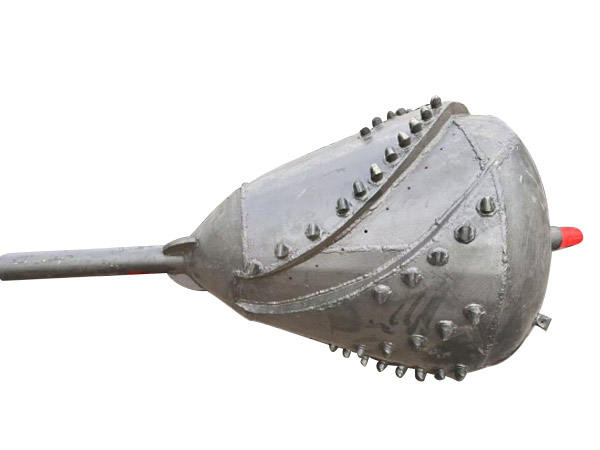
Fluted Reamer: Its unique helical or straight-groove fluted structure not only effectively cuts soil of varying hardness but also uses the flutes to promptly remove mixed cuttings, preventing clogging. It performs particularly stably in alternating soft and hard strata.
For formations with extreme differences in hardness, a stepped-fluted reamer (a variant of the fluted reamer) can be selected. By cutting in stages, it reduces the load on each stage, ensuring the tool maintains stable operation during transitions between different formations.
Operational Guidelines:
Adopt a multi-stage reaming strategy to gradually enlarge the borehole diameter, avoiding sudden changes in tool stress caused by excessive reaming in a single pass.
At the interface between soft and hard formations, appropriately reduce the advance speed, increase the mud flow rate, and increase the frequency of borehole trajectory measurements to prevent deviation.
Rock Formations (Sandstone, Limestone, Granite, etc.)
Formation Characteristics and Challenges:
Rock formations present the most challenging conditions in HDD operations. The compressive strength of hard rocks such as granite and basalt often exceeds 50–150 MPa; under these conditions, standard reamers will rapidly suffer tooth breakage or wear-induced failure. Rock formations place extremely high demands on the tool’s torque capacity, wear resistance, and fragmentation capability.
Recommended Hole opener:
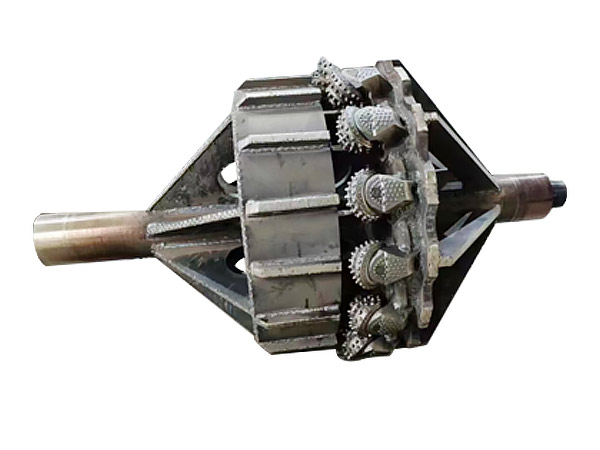
Hole opener(Rock Reamer): This is the premier choice for rock formations. Depending on rock hardness, two subtypes are available: roller bit (roller cutter) or PDC (Polycrystalline Diamond Compound) types:
Roller Cone Rock Reamer: Breaks rock through crushing action, requires lower torque, offers good safety, and is suitable for all types of hard rock.
PDC Reamer: Utilizes diamond composite inserts to shear the rock, offering higher cutting efficiency and wear resistance in medium-hard rock formations.
Detailed Selection Recommendations for Hole openers (using the roller-bit type as an example):
| Rock types | Compressive strength (approx.) | Recommended tooth profiles for roller teeth |
| Soft rock
(shale, soft sandstone) |
< 50 MPa | Steel-toothed (milled-toothed) roller bit |
| Medium-hard rock (limestone, dolomite) | 50~120 MPa | Toothed gear |
| Hard rock
(granite, quartzite) |
> 120 MPa | High-strength tooth-set gears (conical or spherical teeth) |
Key Operating Points:
Carefully select the roller cone tooth profile and bearing grade based on the rock’s compressive strength.
Ensure the reamer is equipped with a reverse withdrawal function to safely clear a stuck-hole situation.
Control drilling pressure and rotation speed to avoid excessive impact that could cause premature damage to the roller cones; the particle size of the cuttings generated should be kept within the mud’s carrying capacity.
Other Key Considerations for Reamer Selection
In addition to geological conditions, the following factors must be comprehensively considered when selecting an HDD reamer:
Reaming Diameter: The final hole diameter must match the finished pipe diameter and allow for sufficient annular clearance. The larger the reaming diameter, the higher the requirements for the reamer body’s strength and torque capacity.
Drilling Rig Capabilities: The reamer selection must be compatible with the drilling rig’s thrust, pullback force, torque, and fluid flow capacity. Designs that exceed equipment limits can lead to overloading or even equipment failure.
Mud System: The number of fluid ports, their angles, and nozzle configuration directly affect cuttings removal efficiency and cooling performance. A sound fluid dynamics design effectively prevents “mud packing” and overheating of the cutting teeth.
Tool Material and Manufacturing Process: Prioritize reamers with bodies forged from high-strength alloy steel, and carefully inspect the quality of welds, heat treatment processes, and the strength of tooth seat welds. Excellent internal quality is the fundamental guarantee of tool reliability.
How should one correctly select an HDD reamer based on different geological conditions? The core principles can be summarized as “First, analyze the geology; second, match the tool; third, set the parameters.” By precisely matching the four types of reamers described above with the formation conditions, you can significantly reduce construction risks:
Soft clay/silt → Prefer cutting-type reamers (open-wing design, prevents mud packing)
Sand layers/gravel → Prioritize barrel-type reamers (stabilizes borehole walls, resists wear); for small bore diameters, reinforced cutting-type reamers may be selected
Mixed interbedded formations → Recommended: channel-type reamers (combine cutting and flow guidance for a smooth transition)
Rock formations → The only choice: tooth reamers (select roller cone or PDC based on hardness)
Please remember: Reamer selection should not rely on the empirical approach of “what was used last time,” but rather on a comprehensive analysis of the current project’s geological survey report, designed borehole diameter, and drilling rig capabilities. Correct selection of horizontal directional drilling reamers not only improves construction efficiency and reduces overall costs but is also a key factor in ensuring the safe and successful completion of the project. Whether you are a construction foreman, equipment purchaser, or chief engineer, mastering this selection logic will enable you to navigate complex formations with ease.