


A Gyro Steering System is an advanced measurement technology that utilizes the physical properties of high-precision fiber optic gyroscopes or mechanical gyroscopes (namely rigidity and precession) to determine the azimuth and attitude of the drill bit or pipeline within the Earth’s rotational coordinate system.
Before introducing the Gyro Steering System, let’s first review the types of steering systems available:
Walk-over Locating System
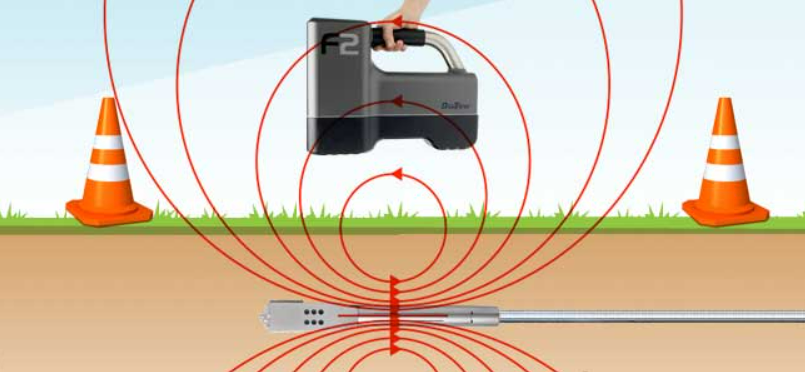
Principle: An operator uses a handheld receiver to detect signals transmitted from a probe located behind the drill bit, obtaining real-time information on depth, inclination, and azimuth.
Advantages:
1)Low cost
2)Simple operation and easy maintenance
3)Suitable for entry-level HDD projects
Limitations:
1)Poor anti-interference capability
2)Not suitable for deep installations or complex subsurface structures
3)Relies on manual tracking, making it less efficient than automated systems
Applicable For:
1)Municipal projects, small-scale power/telecom installations
2)Projects with simple geology and short crossing distances
3)Projects in low-interference environments
Magnetic Guidance System
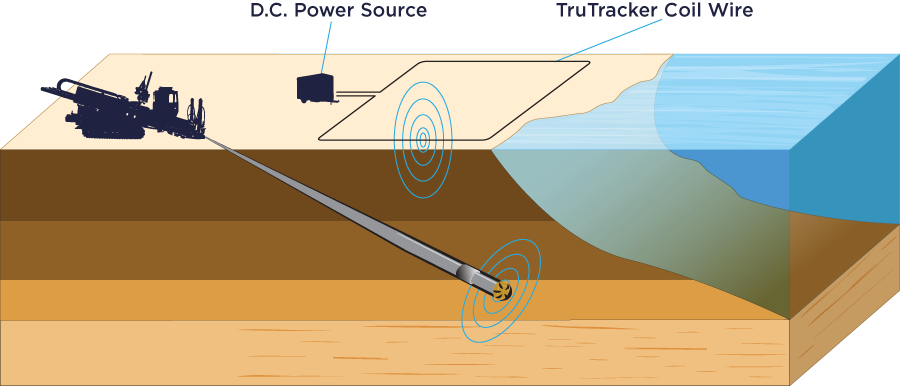
Principle: A wire loop is laid out on the ground surface above the planned bore path. A surface transmitter sends an electromagnetic signal. A receiver probe within the drill head detects the magnetic field, calculates the drill head’s offset and orientation relative to the field, and the system provides real-time feedback on 3D coordinates to guide adjustments.
Limitations:
1)Depth Limitation: Signal penetration through the ground is limited; effective depth is typically within 20-30 meters.
2)EM Interference: Nearby power lines, metal pipes, reinforced concrete structures, etc., can cause strong interference, leading to signal loss or errors.
3)Formation Impact: Highly conductive formations (e.g., clay, aquifers) severely attenuate the signal.
4)Surface Conditions: Requires laying a surface transmitter wire/loop or placing a transmitter, making implementation difficult over rivers, in densely built-up areas, or busy traffic zones.
*(Example: In December 2018, North American EM completed a 2224-meter HDD crossing.)*
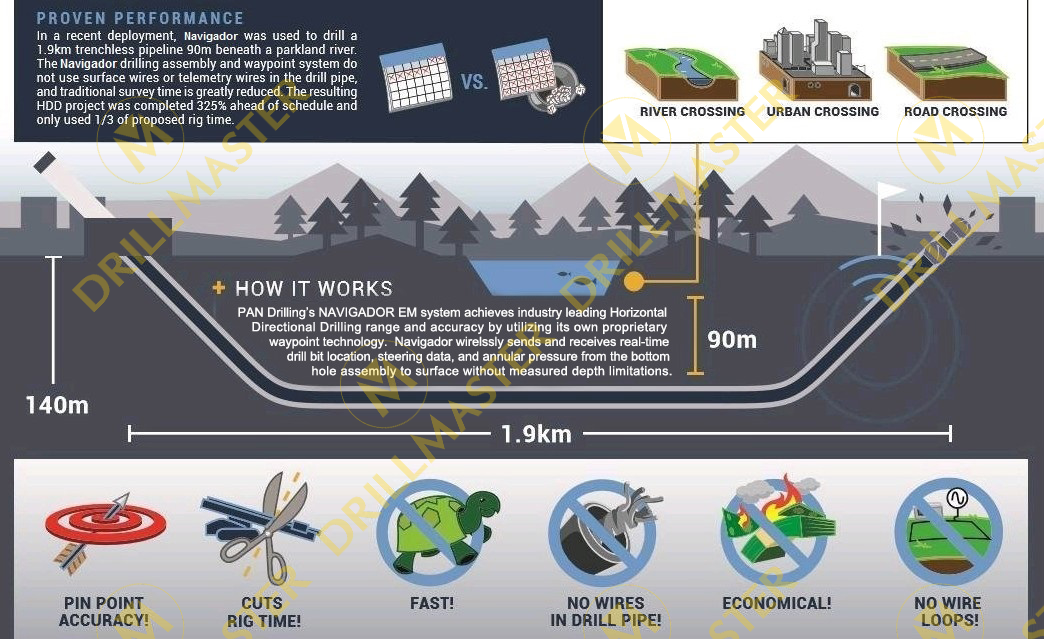
Rotary Steerable System (RSS)
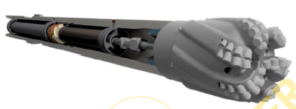
(Historical Note: In 2005, InterCon partnered with Schlumberger to first apply RSS in HDD construction.)
(Example: 2 x 400m crossings in Missouri, using a 250mm drill bit, 1700 LPM flow rate (80 Bar pressure), driving a 171mm RSS.)
Wired Steering System
Principle: Data from sensors (accelerometers, magnetometers) in the drill head is transmitted in real-time to the surface control unit via a cable running inside the drill string.
Limitations:
1)Drill Pipe Limitation: Requires special drill pipe with an integrated cable, which is expensive and complicates operations (requires cable connections).
2)Depth/Distance Limitation: Cable length and signal attenuation limit the achievable drilling distance.
3)Failure Risk: The cable is susceptible to wear, breakage, or connector failure during drilling operations.
In trenchless engineering, precise control over the position and direction of subsurface drill bits or pipelines is paramount. Gyro Steering Systems were developed specifically to overcome the limitations inherent in electromagnetic and wired systems.
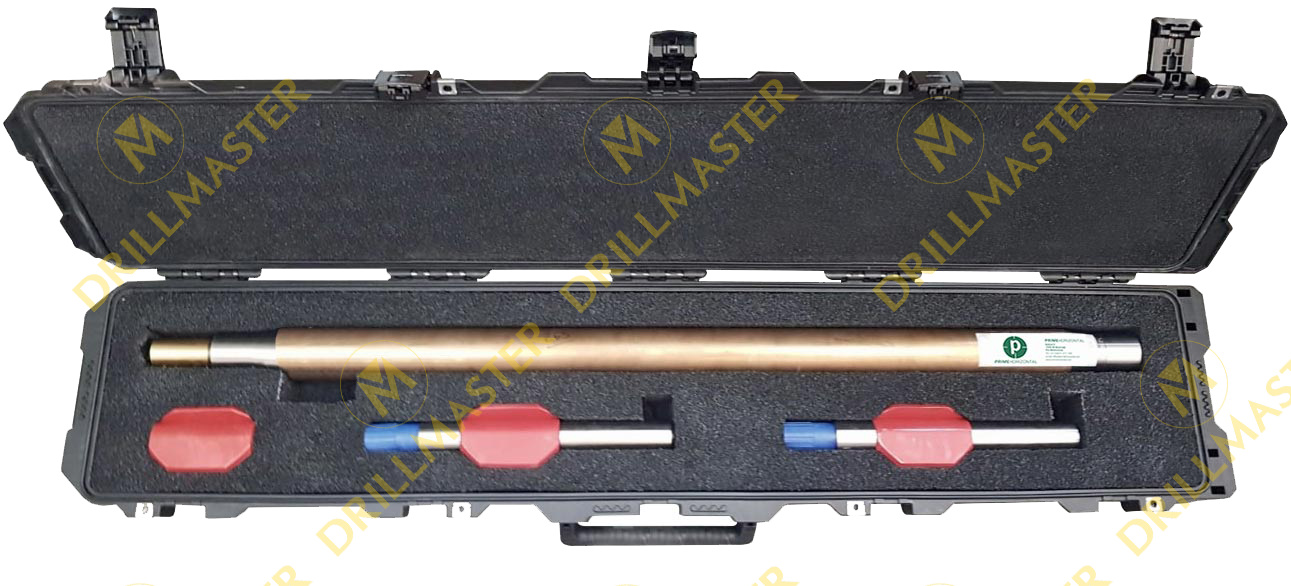
Working Principle of Gyro Steering Systems
Core Sensor – The Gyroscope:
Fiber Optic Gyroscope (FOG): Utilizes the Sagnac effect. It determines rotational angular velocity by measuring the phase difference between two counter-propagating laser beams within a coiled optical fiber, induced by rotation. This is the current mainstream technology, offering high precision, excellent stability, long lifespan, and shock resistance.
Mechanical Gyroscope: Relies on the rigidity (gyroscopic inertia) of a high-speed spinning rotor (used in early systems, now less common).
Key Property – Rigidity (Gyroscopic Inertia): The spin axis of a high-speed gyroscopic rotor inherently maintains its initial orientation in inertial space (relative to the fixed stars). The system senses changes in the drilling assembly’s azimuth by measuring angular velocity changes relative to this “inertial reference frame”.
Auxiliary Sensors:
Accelerometers: Measure acceleration along three axes, primarily used to calculate the drilling assembly’s inclination (pitch and roll angles).
Odometer/Wheel Speed Sensor: Measures the actual distance traveled by the drill bit or pipeline (sometimes calculated algorithmically).
Temperature Sensors: Provide temperature compensation for the gyroscope and accelerometers, enhancing accuracy.
System Components:
1)Probe (Survey Sub/Instrumented Sub): A rugged, sealed housing containing core components (gyroscope, accelerometers, temperature sensors, etc.), installed directly behind the drill bit or within the pipe jacking machine head.
2)Data Acquisition & Processing Unit: Typically located at the surface control console or within a Measurement While Drilling (MWD) system. Receives data from the probe and performs complex calculations.
3)Control & Display Unit: Operator interface. Displays real-time key parameters like 3D position (X, Y, Z), azimuth, inclination, tool face angle, along with a comparison of the actual trajectory versus the planned path.
4)Power Supply: Provides power to the probe and system (the probe usually has an internal battery).
5)Data Transmission (Optional): For real-time steering, probe data needs to be transmitted to the surface. This can be achieved via:
6)Wired Method: Similar to wired steering systems, using drill pipe with integrated cable (less common for pure gyro systems).
7)Mud Pulse Telemetry: Encodes data into pressure pulses within the drilling fluid (common for HDD).
8)Electromagnetic (EM) Telemetry: Used where feasible (limited by formation properties).
9)Memory Mode: Data is recorded within the probe’s internal memory. The probe is retrieved after drilling/jacking is complete to download the data (suitable for pipe jacking or HDD requiring extreme precision but not real-time monitoring).
Workflow:
1)Initial Alignment: Before drilling commences, the probe is placed on a ground reference point with known coordinates and azimuth for static initial alignment. This process allows the gyroscope to “memorize” its initial orientation relative to the Earth’s rotational axis (typically True North).
2)Driving/Jacking: The probe advances underground with the drill bit/pipeline section.
3)Data Acquisition: The gyroscope continuously measures the rate of change in azimuth (angular velocity). Accelerometers measure changes in inclination.
4)Data Processing: Surface or onboard computers perform integration on the acquired angular velocity and acceleration data (inherently prone to cumulative error, mitigated by algorithms). Combining this with the initial position and odometer information, it calculates the current 3D coordinates (longitude, latitude, elevation) and attitude (azimuth, inclination, tool face angle) of the bit/pipeline in real-time.
5)Trajectory Display & Correction: Operators view the deviation between the actual and planned trajectory on the console in real-time. They adjust the drill bit tool face angle or jacking parameters to guide the bit/pipeline along the planned path.
6)Post-Processing (Optional): For memory mode, data is downloaded after probe retrieval. More precise algorithms (considering Earth rotation, gravity field variations, etc.) are applied during post-processing to obtain a higher-accuracy final trajectory.
Advantages of Gyro Steering Systems:
1)Immunity to EM Interference: Completely unaffected by underground cables, pipes, rebar, power lines, substations, etc.
*(Examples: Netherlands – 700m crossing under 67 railway tracks; Australian iron ore mine HDD site)*
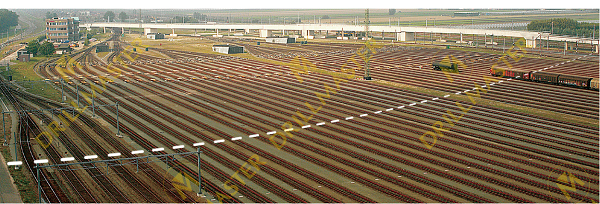
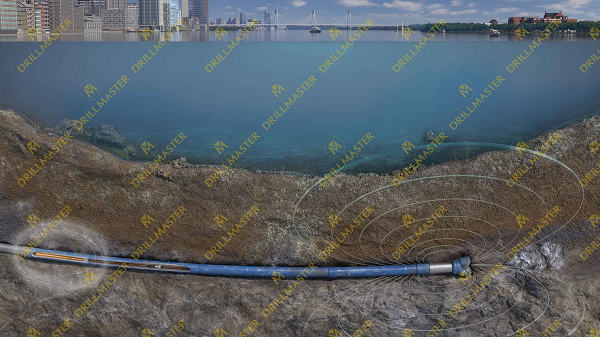
2)No Ground Surface Equipment Required: Eliminates the need for laying surface transmitter wires or setting up large transmitters. Particularly suitable for crossings under rivers, lakes, buildings, airport runways, railways, highways, and other areas where surface operations are difficult.
(Example: Mountainous terrain HDD crossing site)
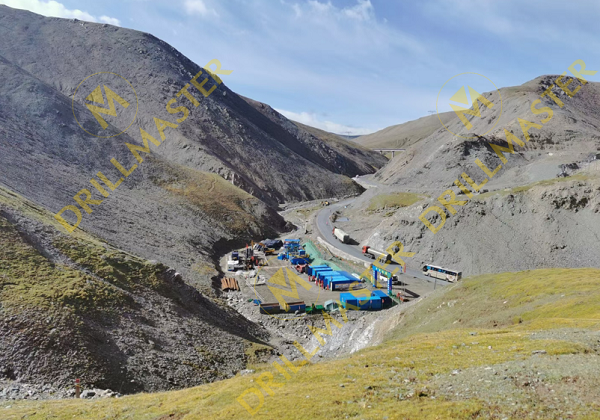
3)Unrestricted in Urban Areas: Operates effectively in complex urban environments.
4)No Depth Limitation: Theoretically has almost no depth limit, suitable for kilometer-scale long-distance crossings (e.g., large rivers, straits, mountains).
*(Example: Mongolia – High-angle hard rock crossing, rock strength 100-300 MPa, length 800m, depth 310m)*
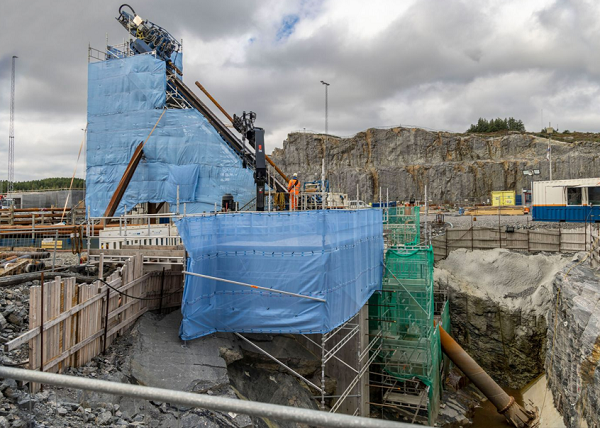
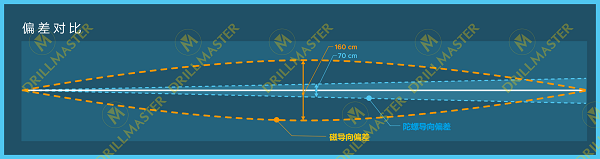
5)High Precision – Smooth Curves, Good Borehole, Low Pullback Force: Precise steering minimizes pilot bore curve errors. Smooth curves translate to lower pullback forces. Modern FOG systems achieve very high accuracy in long crossings (typically better than 0.1% of the crossing length, often higher). Azimuth accuracy is especially critical and outstanding.
(Note: Diagram comparing theoretical deviation between gyro and magnetic systems at 40m depth with no interference would be shown here)
Limitations of Gyro Steering Systems:
1)High Cost: The equipment itself is expensive, the technology is complex, and service costs are significantly higher than traditional EM systems.
2)Complex Operation: The initial alignment process is stringent and requires specialized technicians for operation and maintenance.
3)Cumulative Error: Gyroscopes measure angular velocity; integration is required to determine angular change, which theoretically introduces error that accumulates over time. While high-precision sensors, temperature compensation, zero-velocity updates (ZUPTs), and post-processing effectively control this, it remains a consideration for ultra-long distance/duration operations.
4)Critical Initial Alignment: The accuracy of the initial alignment directly determines the accuracy of the entire trajectory survey. Alignment must be performed in a stable, vibration-free environment.
5)Real-Time Transmission Limitations: For systems relying on mud pulse or EM telemetry, transmission rate and reliability can be limited under extreme conditions (e.g., gas-cut mud, complex formations). Memory mode offers no real-time monitoring.
Primary Application Scenarios:
1)Large River, Lake, Strait Crossings: Typical scenarios involving great depth, long distance, and impossible surface operations.
2)Crossings Under Critical Infrastructure: Such as highways, railways, airport runways, dams, and large buildings, where high precision is required and surface access is restricted.
3)Areas with Severe EM Interference: Near high-voltage power lines, substations, or dense underground utilities.
4)Deeply Buried, Long-Distance Pipeline Installation: Oil/gas transmission pipelines, major city trunk lines.
5)High-Precision Engineering Projects: Such as subway connecting passages, precise junction projects.
6)Pipe Jacking Projects: Especially suitable for long-distance curved jacking or crossings under sensitive areas.
Technical Specifications & Accuracy:
1)Azimuth Accuracy: Typically in the range of 0.1° – 0.01°/√h (where h is measurement time in hours), can be higher with post-processing.
2)Inclination Accuracy: Typically 0.05° – 0.1°.
3)Position Accuracy: Final position accuracy (CEP – Circular Error Probable) is generally better than 0.1% of the crossing length. E.g., for a 1000m crossing, the position error is typically less than 1m (Actual accuracy is influenced by initial alignment, installation error, odometer accuracy, post-processing level, etc.).
4)Operating Temperature Range: Typically -20°C to +85°C.
5)Pressure Rating: Probe housing must withstand high hydrostatic pressure. Common ratings include 100 bar, 200 bar, or higher.
After browsing this article, if you still can’t confirm which system is suitable for your projects, welcome to contact us.
Our professional sales and experienced engineers will provide you solutions based on your needs.
Email: drillto@hddmaster.com